We like to say that every nation has its moment of glory. It is flattering, but false. History is not a lottery of equal chances: it rewards people capable of building power, and punishes those who merely wait for it. It is not about empires that return, but people who endure.
Morocco belongs to this rare category, it is not a nostalgic power but a dormant one. The question today is not whether it can come back, but how it will adapt to the new rules of the 21st century.
Understanding What Power Really Means
Power is too often confused with modernity, technology with dependency, or military budgets with authority. To be a power is not to accumulate statistics, nor to flaunt industrial showcases, not even to multiply alliances. It is something else.
Ibn Khaldun already sensed this in the 14th century: the stability of a state rests above all on internal cohesion, a bond of loyalty and trust between rulers and ruled. In Morocco, this logic has historically been embodied in the Bay‘a, a symbolic pact that, century after century, seals continuity and unity around the monarchy. This cohesion has enabled the state to withstand shocks and reinvent itself without disintegration.
Then the Industrial Revolution transformed the very nature of power. It no longer rested on armies alone, but on knowledge, networks, and innovation. Power became a matter of rhythm: the ability to anticipate, to innovate, and to impose one’s own priorities on the rest of the world. In short, to be a power is to impose your tempo on others.
Morocco: A Historical Continuity in Motion
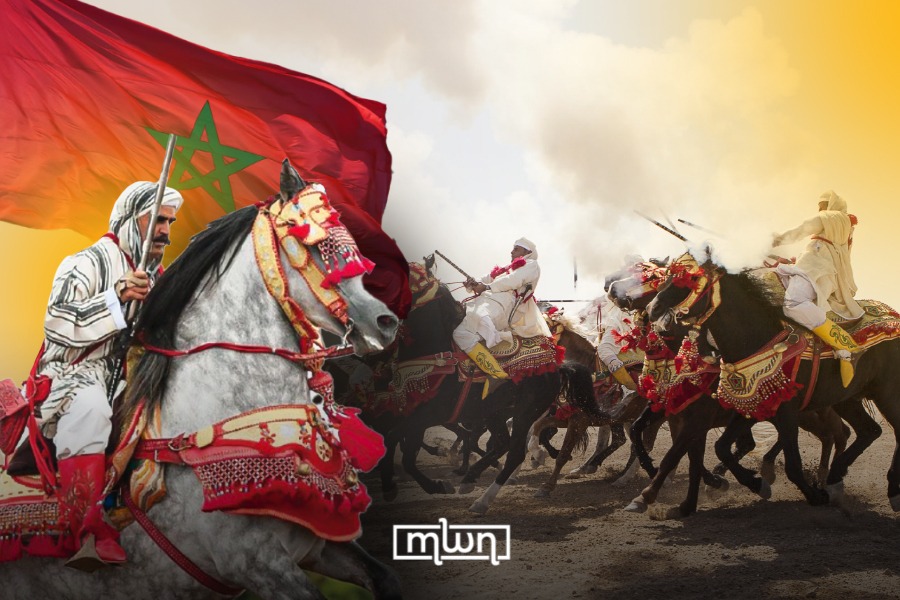
In this global transformation, Morocco stands as an anomaly. It has never been absorbed by the Ottoman Empire, never erased by colonization. Where others experienced collapse or fragmentation, Morocco preserved a center of institutional gravity: a monarchy rooted for twelve centuries, a unified territory, an administration evolving slowly but steadily. In other words, a state civilization.
This endurance owes nothing to chance or miracle. For decades now, Morocco has been laying the foundations of a true strategic state: consolidating central authority, building modern infrastructure, expanding its diplomatic reach, investing in precision agriculture, renewable energies, and, more recently, pharmaceutical and industrial sovereignty. Nothing spectacular, nothing populist: a silent but deliberate strategy.
Morocco is not a sprinter. It advances like a long-distance runner, steady and tenacious. In today’s disorder, endurance often outweighs brute force. Those who keep pace long enough eventually set the pace.
Other countries of the region illustrate this trajectory as well: Spain, after civil war and Franco’s isolation, it managed to reassert itself as a central European actor and a bridge to Latin America and North Africa. Turkey too, with its military-industrial base and assertive diplomacy. And Iran, despite war and sanctions, has preserved a strategic capacity in its region. These examples, of long lasting empires, prove that a return to power is possible for nations that combine vision, cohesion, and endurance.
The Challenge of the 21st Century: Holding On Without Diluting
But no foundation is eternal. The greatest risks for Morocco and the countries I cited will not come from foreign invasions but from within: ideological, social, and cultural erosion. In the accelerated globalization of our time, everything appears interchangeable : political models, social systems, cultural references. Sometimes we believe that borrowing is enough to progress, that importing ideas or institutions can substitute for patient internal construction. Yet history shows otherwise: neither Singapore, nor South Korea, nor Germany, nor modern Spain were built through mimicry. They were forged by discipline, hierarchy, and their own vision.
For Morocco, the real danger is not to be defeated but to be diluted. Massive importation of external models, without adaptation, risks dissolving the historical energy that has sustained it. When a society stops drawing from its own resources to project itself forward, the entire edifice trembles.
To reclaim power does not mean repeating the past but resuming an interrupted history. It requires brutal lucidity about weaknesses : technological dependence, industrial fragility, social fractures, while reactivating strengths: a unique geography, a seasoned diplomacy, a resilient state.
In other words, what Morocco now needs is a strategic state, elites grounded in reality, and a society that stops chasing the gaze of others and resumes producing for itself. In short, an assumed and structured demanding project of power.