 Join on WhatsApp
 Join on Telegram
In recent months, Morocco has witnessed an unprecedented surge in public debates about food quality and safety. At the heart of these debates lies an urgent question: are Moroccan consumers genuinely at risk, or are they caught in a storm of misinformation, amplified by fear and a lack of understanding?
The truth is complex. Some threats are real, others exaggerated, and many are simply misunderstood or miscommunicated.
Yet behind this confusion lies a deeper problem: the widespread inability to differentiate between food quality, safety, fraud, and defense. Terms are used interchangeably, panic often outweighs evidence, and distrust toward both industrial and traditional products continues to grow.
This article aims to demystify these concepts and examine the Moroccan food system with clarity. By avoiding sensationalism and basing analysis on science and regulatory frameworks, one can bring nuance to a topic too often clouded by fear and contribute, in a small way, to rebuilding trust at the Moroccan table.
Disentangling the Basics: Food Quality, Safety, Fraud, Crime and Defense
Many people think that food safety and food quality are the same. They are different but closely related: one keeps consumers safe, and the other keeps consumers satisfied.
Food Safety: It’s about ensuring that food is free from hazards that could harm the consumer. It focuses on preventing contamination and foodborne illnesses through proper handling, storage, preparation, and distribution. In short, safe food should never make someone sick when used as intended.
Food Quality: Unlike food safety, quality centers on the traits that make a product desirable, reliable, and aligned with consumer expectations. It includes sensory attributes – appearance (size, color, shape, consistency), texture, and flavor – as well as accurate, complete labeling with ingredients, nutrition facts, and manufacturer details.
Quality also depends on proper packaging and sealing to preserve freshness, prevent tampering, and ensure ingredients meet defined standards. Traceability is another key element, allowing a product to be tracked through the supply chain in case of a recall.
Ultimately, food quality is about delivering value for money, meeting regulatory and customer requirements, and supporting the product’s economic viability.
Food Fraud: The food industry operates on narrow profit margins, leading some unethical operators to use counterfeiting or adulteration – collectively known as food fraud – to increase earnings.
Food fraud involves the intentional substitution, addition, tampering, or misrepresentation of food, its ingredients, or packaging, including false or misleading product claims, all for economic gain.
According to the Grocery Manufacturers Association, such fraud costs the global food industry an estimated $10–15 billion annually and affects roughly 10% of commercially sold food products.
Economically Motivated Adulteration (EMA) has been used interchangeably with food fraud. The US Food and Drug Administration defines EMA as “fraudulent, intentional substitution or addition of a substance in a product for the purpose of increasing the apparent value of the product or reducing the cost of its production, i.e., for economic gain.”
This includes adding cheaper ingredients to make a product seem more valuable, such as mixing cheaper oils into olive oil or adding fillers to increase a product’s weight.
Food Authenticity: It’s defined as food being authentic, and described as a “match between the food product characteristics and the corresponding food product claims.” Food authenticity ensures that a product is what it appears to be in terms of its natural properties, composition, and quality, as expected by the buyer.
It moves beyond the narrow definition of food fraud to encompass the broader aspects of what consumers expect from their food. It also involves ethical practices in sourcing, processing, and distribution, as well as respect for the environment and human rights. A core objective is to provide assurance to consumers and stakeholders that the food they are purchasing is safe, genuine, and high-quality.
Food Crime: Food crime is defined as serious fraud and related criminality in food supply chains. It can be seriously harmful to consumers, food businesses, and the wider food industry. All food fraud is a form of criminal behavior, no matter the definition of crime.
Food Defense: Food defense is a lesser-known but equally important concept. It refers to protecting the food supply against intentional harm such as sabotage, tampering, or bioterrorism. While such risks are rare and often associated with national security concerns, they are sometimes wrongly conflated with food fraud, especially in media discourse.
For example, a contaminated batch of milk due to negligence is a safety issue, but milk poisoned intentionally to cause harm would fall under food defense. Differentiating the two is essential for developing effective preventive strategies.
Understanding the difference between these concepts (food safety, quality, fraud, and defense) is crucial. It helps consumers and professionals assess the severity of incidents, respond appropriately to product recalls, and avoid unnecessary panic. A recall due to mislabeling or quality non-compliance is not the same as a recall due to contamination or fraud. Distinguishing these layers allows for informed decision-making and helps maintain trust in the system when it is justified.
What’s Really Going On in Morocco?
To bridge the gap between public perception and actual risk, it’s helpful to explore a few case studies that have captured the Moroccan public’s attention. Each illustrates the complex interplay between tradition, regulation, misinformation, and real threats.
Food fraud involves a wide range of food products, including grains, milk products, honey, olive oil, alcoholic drinks, and organic foods.
But olive oil fraud stands out as particularly significant due to the stark contrast in quality and value between genuine and adulterated oils.
Olive Oil Fraud: A High-Value Target
Olive oil is produced from processed olive fruit and is highly valued for its nutritional benefits and cultural importance, particularly in Morocco. Its rising market price, combined with the fact that most consumers cannot detect adulteration on their own, has made it a prime target for fraudsters.
Common schemes involve blending extra virgin olive oil with cheaper refined oils, such as palm or olive pomace oil, adding artificial colorants to imitate the appearance of high-quality oil, and selling lampante oil (a non-edible, industrial-grade product) as virgin or extra virgin oil.
Fraudulent techniques are becoming increasingly sophisticated, sometimes modifying oils at the molecular level, beyond the reach of standard laboratory testing or requiring very costly analysis. Because authentic olive oil is typically consumed without further processing, adulteration severely compromises both its nutritional value and sensory qualities.
According to the 2019 European Union Food Fraud Network Report, fats and oils generated the highest number of fraud alerts, with olive oil being the most frequently reported product. Historically, olive oil fraud has gone far beyond economic deception.
Two major public health incidents illustrate the potential danger: In 1959 Morocco, olive oil adulterated with jet engine lubricants caused illness in over 10,000 people, and in 1981 Spain, more than 20,000 people were poisoned by denatured rapeseed oil sold as olive oil, known as the “toxic oil syndrome.”
In Morocco today, an estimated 85% of olive oil is still sold unpackaged, in bulk, directly from mills, souks, or roadside vendors. This traditional model reinforces trust in “beldi” products but also opens the door to significant risks.
While bottled, certified olive oil offers greater transparency, labels like AOP (Appellation d’Origine Protégée) remain rare and expensive. This disconnect fosters ongoing skepticism and makes it difficult for consumers to distinguish authentic products from adulterated ones.
Processed Cheese: A Victim of Misunderstanding or a Real Danger?
Processed cheese was recently accused of containing “toxic” or “chemical” ingredients due to additives such as E-numbers, palm oil, or emulsifying salts. However, these ingredients are legally approved and widely used across international food industries.
The fear often stems from confusion between synthetic but safe additives and genuinely unsafe substances. While palm oil raises environmental and nutritional concerns, its presence in processed cheese does not make it toxic. Much of the controversy arises from a lack of distinction between regulatory food safety (which relies on toxicological evaluations and permitted doses) and the perception that “natural” equals “safe,” while “processed” equals “dangerous.”
These examples highlight a central truth: public concern is justified, but not always informed. Without clear communication and regulation, consumers are left to navigate rumors, traditions, and fragmented information in an increasingly complex food landscape.
The Moroccan Consumer: Between Tradition, Mistrust, and Modernity
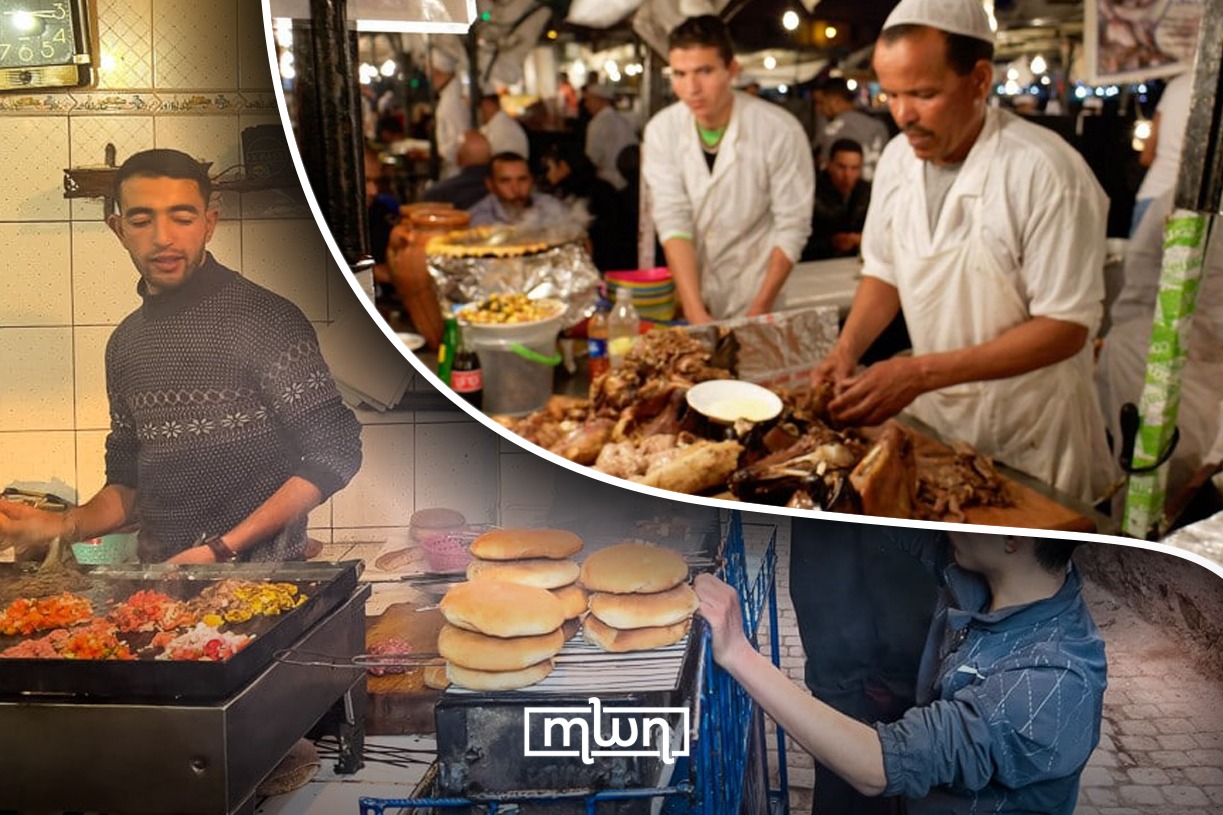
Moroccan consumers stand at a crossroads. On one hand, there is a deep emotional attachment to the traditional food system: products from the souk, fermented dairy from Mahlaba, olive oil pressed by hand, and the idealized “beldi” origin. These foods evoke purity, identity, and authenticity.
On the other hand, the same consumers increasingly seek packaged, certified, convenient products that reflect modern lifestyles and global standards of safety. Industrial products are often perceived as suspicious because they are unfamiliar, while traditional products are idealized even when they may carry real hygienic risks.
Nostalgia becomes a filter through which food safety is judged, and fear of the unknown fuels mistrust toward regulatory institutions. The challenge is to reconcile emotion with evidence, and culture with science.
The Role of Institutions and Media in Fueling or Reducing Confusion
In Morocco, institutions such as National Office of Food Safety (ONSSA), veterinary services, and consumer protection bodies play a central role in monitoring food safety. While inspections, sampling, and regulatory frameworks exist, the perception of inefficiency or hidden interests weakens trust. Their actions often remain invisible or misunderstood by the public.
At the same time, social media has become the primary source of food-related “information,” amplifying fear-based narratives, partial truths, and viral claims far more quickly than any scientific clarification can respond. Whispers on WhatsApp and sensational headlines often overshadow official reports, feeding a climate where doubt becomes more powerful than evidence.
This confusion is also fueled by the absence of accessible science communication. Technical language, vague announcements, and a lack of consumer education allow rumors to fill the void. Transparency and proactive communication are crucial to empower consumers to distinguish genuine risks from misinformation.
The Way Forward, A Clean Plate
For Morocco to move past cyclical food safety panics, clarity and education must replace confusion and noise. Rebuilding trust in the food system will come from transparency, accountability, and a shared culture of knowledge.
Public institutions need to strengthen both enforcement and communication, while schools, media, and professionals must invest in accessible scientific literacy. Consumers, too, have a role: to question, verify, and think critically, instead of reacting emotionally.
A few practical steps can significantly reduce food-related risks:
- Always read product labels carefully and choose items with clear traceability (origin, expiration dates, ingredients).
- Prioritize certified products and brands (ISO-certified, ONSSA-approved, or backed by legitimate quality labels).
- Be cautious with bulk products or items sold without packaging, especially those marketed as “traditional” or “beldi” without proof of safety or authenticity.
- Stay informed through credible sources such as food safety authorities, and official recall notices.
- Demand transparency from producers and retailers, especially on high-risk products such as oils, dairy, or processed meats.