Marrakech – The Polisario Front’s projectile attack on the city of Es-Smara on Tuesday has triggered a torrent of international denunciation, with the United Nations, the United States, France, and the European Union all lining up to lambaste the Algeria-backed separatist militia in some of the sharpest language directed at the group in years.
Three projectiles struck the vicinity of Es-Smara, landing near the local prison and behind the city’s cemetery. A woman was injured and hospitalized. The Polisario claimed it had carried out a “targeted bombardment against enemy rear bases” and inflicted “significant losses.” Field reports flatly contradicted those claims.
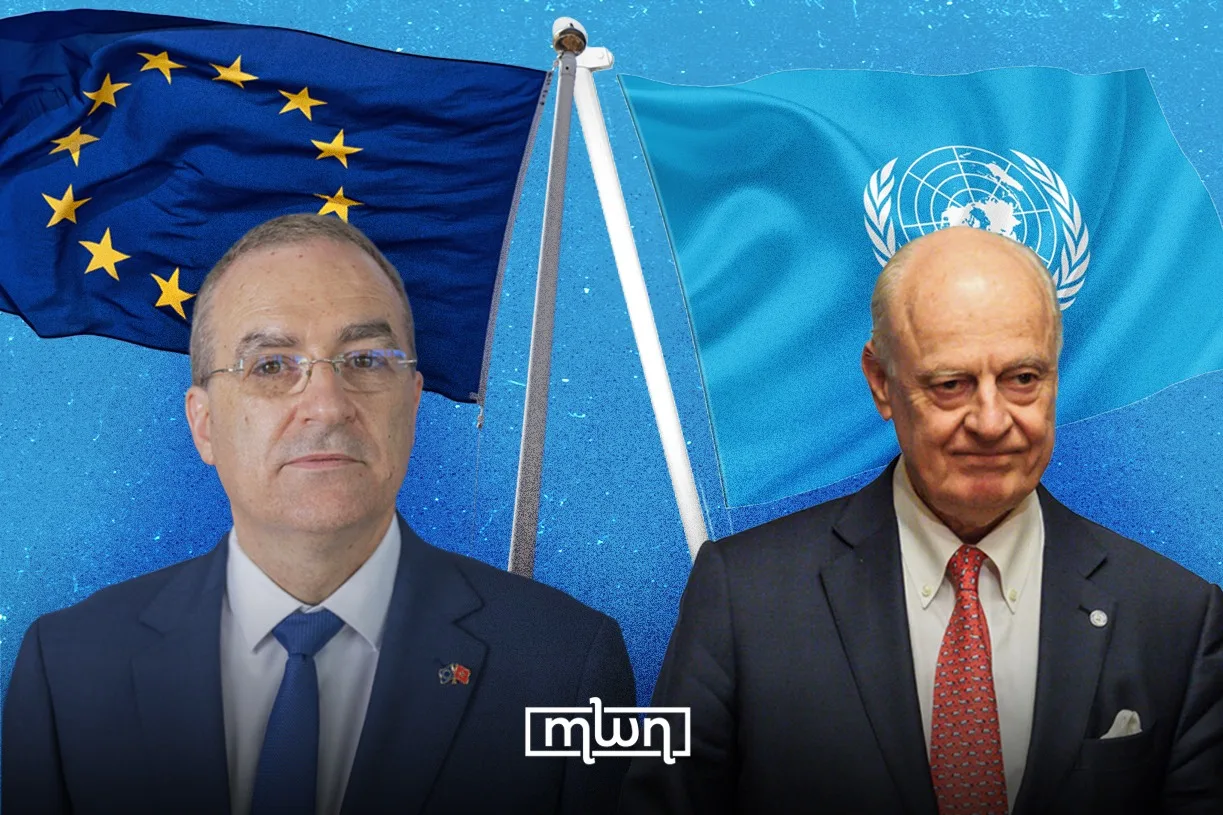
The European Union joined the chorus of Washington and Paris on Friday. EU Ambassador to Morocco Dimiter Tzantchev stated that the Es-Smara attack “should be condemned” and that “now is not the time for escalation, but for negotiation.” He also referenced Resolution 2797 and Morocco’s Autonomy Plan as the basis for a political settlement consistent with the UN Charter.
الهجوم الأخير على السمارة ينبغي إدانته. ليس هذا وقت التصعيد، بل وقت التفاوض وفق قرار مجلس الأمن 2797 (2025) على أساس مخطط المغرب للحكم الذاتي، من أجل حل عادل ودائم ومقبول للطرفين يتوافق مع ميثاق الأمم المتحدة. https://t.co/hgy1M46sA5
— UE au Maroc (@UE_au_Maroc) May 8, 2026
At the United Nations, the response was equally forceful. UN Secretary-General spokesperson Stéphane Dujarric told reporters on Thursday that MINURSO had “expressed deep concern over rocket firing in civilian areas” and urged all parties to avoid acts that could jeopardize the political process.
Staffan de Mistura, the Secretary-General’s Personal Envoy for Western Sahara, endorsed MINURSO’s concerns and stated bluntly: “This is a time for dialogue and negotiations, not a time for military escalation.”
View this post on Instagram
The United States was the first to react. The US Mission to the United Nations issued a statement on Wednesday, condemning the attack in unequivocal terms. “We condemn the attacks by Polisario Front in Es-Smara,” the statement read. “Such violence threatens regional stability and the progress made towards peace.”
Washington called the actions “inconsistent with the spirit of the recent talks” and declared that “the time to end this 50-year-old dispute is now.” It reaffirmed that the Moroccan Autonomy Plan, as endorsed by UN Security Council Resolution 2797, “lays out the path to peace in Western Sahara.”
The US Embassy in Algiers then amplified the message on Friday, posting: “The status quo in Western Sahara serves no one’s interest and cannot continue.” The decision to broadcast that message from Algiers – the Polisario’s chief patron – was a deliberate diplomatic signal aimed squarely at the military junta.
الوضع الراهن بالصحراء الغربية لايخدم مصالح أي احد و لايمكن أن يستمر.
Western Sahara: the status quo serves no one’s interest and cannot continue https://t.co/9RU7JfYFlT
— US Embassy Algiers (@USEmbAlgiers) May 8, 2026
France followed on Thursday. The French Mission to the United Nations condemned the attack and warned that it “threatens regional stability and jeopardizes the negotiation process launched following the adoption of Security Council Resolution 2797.”
Paris called on the Polisario to respect the ceasefire and the cited resolution. France reiterated that Morocco’s Autonomy Plan under Moroccan sovereignty “constitutes the only basis” for a just, lasting, and mutually acceptable solution.
The diplomatic avalanche has landed on the Polisario at a moment when its political fortunes were already in freefall. In Washington, legislative efforts to formally designate the group as a Foreign Terrorist Organization are advancing in both chambers of Congress.
In the House, H.R. 4119 – the Polisario Front Terrorist Designation Act – was introduced by Republican Joe Wilson with Democrat Jimmy Panetta as an original cosponsor. The bill now counts 12 sponsors and cosponsors.
In the Senate, Senators Ted Cruz, Tom Cotton, and Rick Scott introduced a companion bill in March this year, with Senator David McCormick later joining. The legislation would trigger sanctions and a formal terrorist designation if the Secretary of State confirms cooperation between the Polisario and Iranian-affiliated groups.
The congressional push did not emerge in a vacuum. In late April, Monica Ager Jacobsen, Senior Bureau Official for the Bureau of Counterterrorism, publicly acknowledged US concerns over the Polisario’s proximity to Iranian networks during a Senate hearing on counterterrorism in Africa.
“The region where the Polisario Front operates sits near trafficking and militant activity in the Sahel, and that this creates vulnerabilities that external actors, including Iran, could seek to exploit,” she stated, adding that the State Department and intelligence community “are working closely” on allegations of Polisario collusion with Hezbollah and the IRGC.
Senator Cruz, who prompted those remarks, had been blunter: “Iran is actively working to turn the Polisario Front into the Houthis for West Africa.”
The attack on Es-Semara also came as the African Lion military exercise, organized by US Africa Command in partnership with Morocco’s Royal Armed Forces (FAR), was underway in southern Morocco. It also coincided with renewed US-led diplomatic momentum toward a final resolution of the Western Sahara conflict based on Morocco’s Autonomy Plan.
The debacle has, in effect, handed the Polisario’s adversaries the ammunition they needed. A group already hemorrhaging international recognition, already losing diplomatic ground with each passing UN session, chose to fire rockets at a civilian city – and in doing so, furnished the very evidence its detractors had been assembling. The militia has not merely undermined its own negotiating position. It has eviscerated it.
What remains of the Polisario’s political credibility now lies in the same rubble as its projectiles outside Es-Smara. A relic of Cold War-era proxy conflicts, the group has devolved into little more than a destabilizing appendage of the Algerian military establishment – a spent force whose only remaining currency is sporadic violence against civilians. The Es-Smara attack did not project strength. It broadcast desperation. And the world noticed.
The Polisario, in launching those rockets at Es-Smara, has done what no adversary could have done more effectively on Morocco’s behalf – it has dug its own grave with its own hands. Every projectile that landed near that prison and that cemetery was a nail in the coffin of whatever political standing the group still claimed to possess.
As Talleyrand once remarked in his immortal quip about a political catastrophe of irreversible consequence: “It was worse than a crime; it was a blunder.”
The Polisario’s Es-Smara gambit was both. A militia that answers diplomacy with rockets, that meets negotiation with provocation, and that responds to a closing window of relevance by shattering it entirely, has authored its own obituary. The international community is no longer debating whether the Polisario is part of the solution. It is now debating whether it belongs on a terrorist list.
Read also: ‘UN Resolution Is Making Its Way,’ Tebboune Says – A Changing Tone from Algiers?