
 Join on WhatsApp
 Join on Telegram
Morocco houses dozens of Churches and Synagogues protected by the state with freedom to operate publicly, while Islam is Morocco’s state religion, and Judaism is the second institutional recognition with full legal status. Freedom of worship is guaranteed under Article 3 of the Constitution.
Open Doors ranks Morocco 23rd on its World Watch List of countries said to “persecute” Christians and converts, applying labels like “Islamic Oppression” and “Dictatorial Paranoia” without clarification or direct supporting evidence. The list’s credibility has been questioned before, notably in 2015, when the Dutch Christian daily Nederlands Dagblad reported fabricated or exaggerated claims regarding Egypt. When Morocco World News (MWN) asked Open Doors for evidence supporting its public claims, the organization replied:
“Independent organizations such as Freedom House, Humanists International and Aid to the Church in Need have observed that local Moroccan Christians can face pressure and social restrictions. The World Watch List, published annually by Open Doors, reflects the same reality.”
This statement contradicts the World Watch List statements. Open Doors appears to have stretched the definition of persecution to cover post-conversion discrimination and social stigma. Plus, it failed to provide evidence for its claims and labels to MWN.
Individuals affiliated with Open Doors through participation and active fundraising were found to spread unsubstantiated claims about Morocco via social media. One of the easiest to verify claims was that Morocco has only two churches. They claimed that churches are facing radical Islamist attacks, and that converts to Christianity face rape, forced marriage, and prison. A participant who is also a content creator did not respond to MWN’s request for clarification and deleted the video afterwards.
Using sports event Muskathlon and tourism as cover to evangelize in sovereign countries
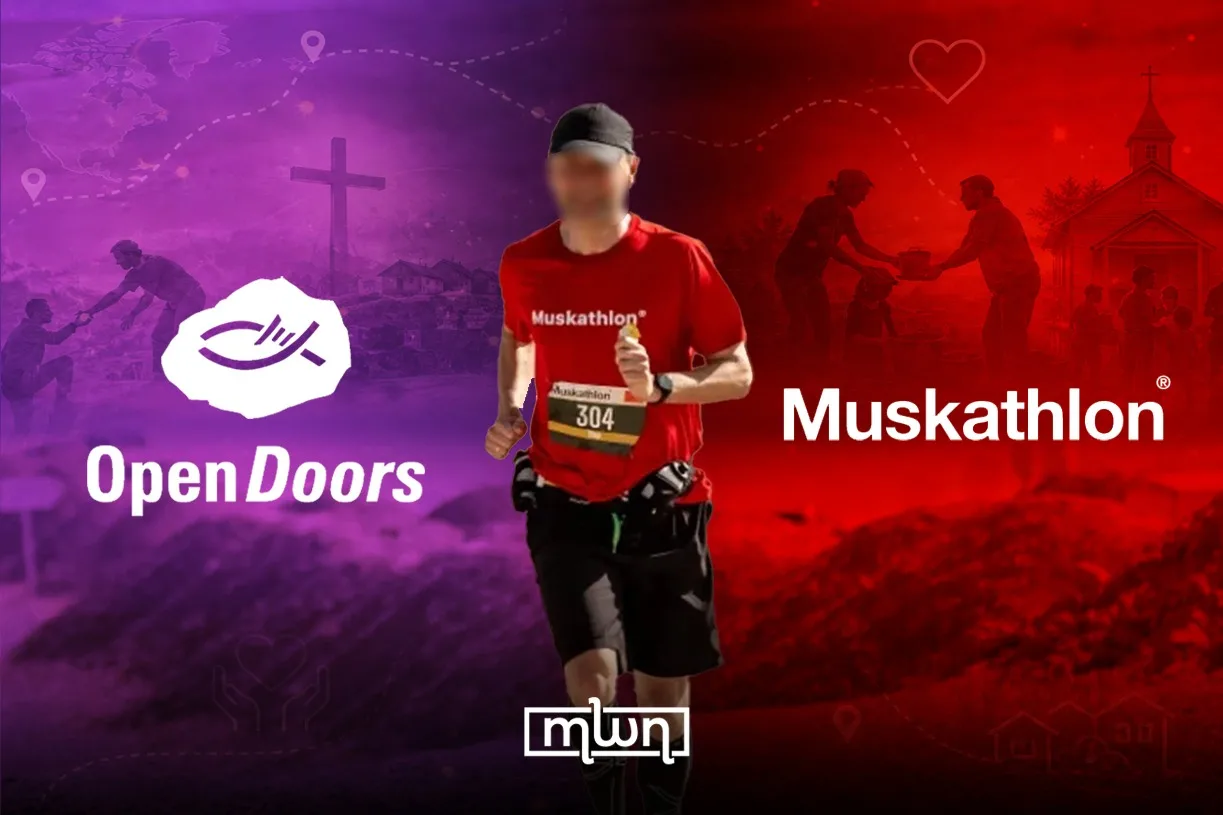
MWN discovered in April 2026 that Open Doors enters Morocco through its endurance sports program named Muskathlon. The participants are encouraged to raise 10,000 euros before traveling. This sports event, followed by large fundraising, triggered the following investigation because of their upcoming trip to Morocco in December 2026.
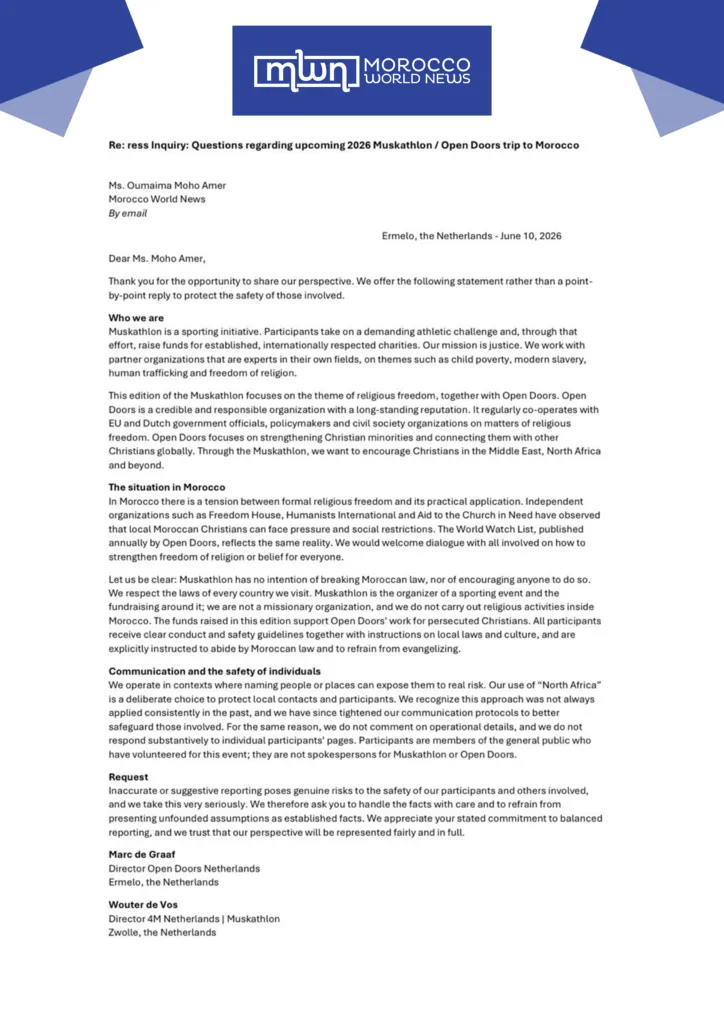
Although the trip is advertised as “North Africa”, participants’ pages and previous Muskathlon travels reveal Morocco as the destination. Asked about the renaming of Morocco as North Africa, Open Doors responded: “Our use of ‘North Africa’ is a deliberate choice to protect local contacts and participants.” The organizations acknowledged their communication protocols had changed, adding, “We recognize this approach was not always applied consistently in the past, and we have since tightened our communication protocols to better safeguard those involved.” Through a participant’s page, MWN discovered that the upcoming trip will be an ultra marathon in the Moroccan Sahara desert, joined by Bible distribution.
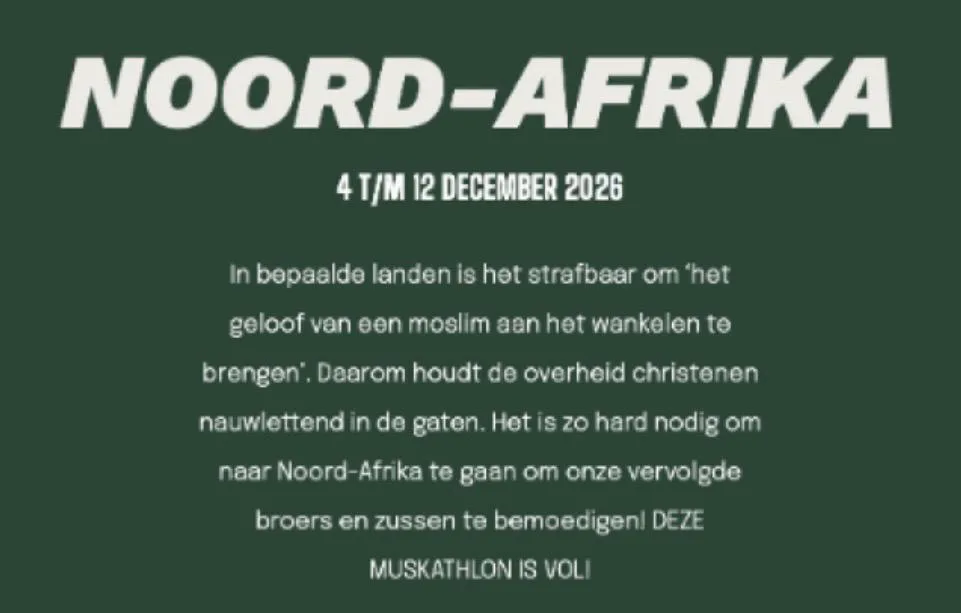
Open Doors and Muskathlon acknowledge Article 220 of the Moroccan Constitution and actively communicate that shaking a Muslim’s faith is prohibited by law. Yet they promote Bible and Christian text distribution, visits to clandestine churches, with the following pledge: “There are also Christians who specifically set out to evangelize, even though this is prohibited by law. Why do Christians take such a great risk? Join us on a journey and discover it for yourself in this beautiful country.”
Open Doors denies religious activities in Morocco, but the investigation finds the opposite
Open Doors refused to clarify their promotional message. Instead, in a joint statement to MWN, the organizations denied carrying out “religious activities inside Morocco.”. While the Open Doors US page admits that having ministry workers and Open Doors partners active across North Africa.
Open Doors responded to MWN, they “explicitly instruct participants to abide by Moroccan law and refrain from evangelizing.” MWN’s investigation established that Open Doors/Muskathlon’s joint statement contradicts the travel diaries and pictures of their Muskathlon 2024 trip in Morocco on their Instagram page. The pictures show participants engaged in what appear to be religious activities. They visited Aït Ben Haddou, where participants met with what they call “hidden believers,“ prayed together, and followed the organization’s mission. In earlier versions of their Moroccan diary, Muskathlon reports closing the shutters to start their prayer in a group. These diaries were removed after online scrutiny and earlier explorative questioning.
The visiting center staff said Open Doors collaborates with local evangelizers, as in China’s Muslim-majority Xinjiang province, since a local draws less attention than a foreigner. The staff added that the organization never enters a country visibly as Open Doors, but as tourists through an external travel agency to stay off the radar. Muskathlon wrote in their Morocco travel journey that they do not share who they are or their affiliation because of potential danger.
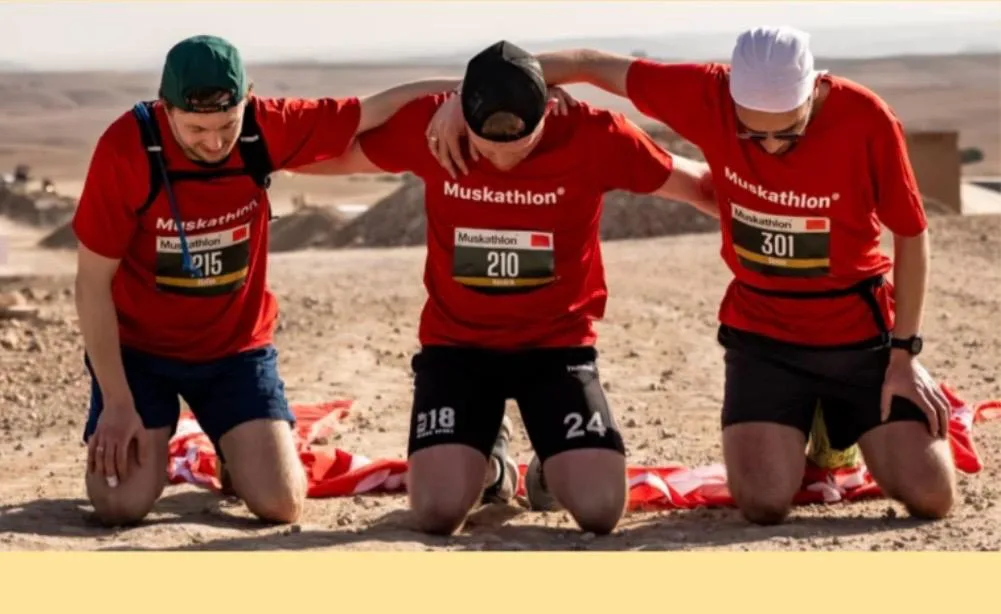
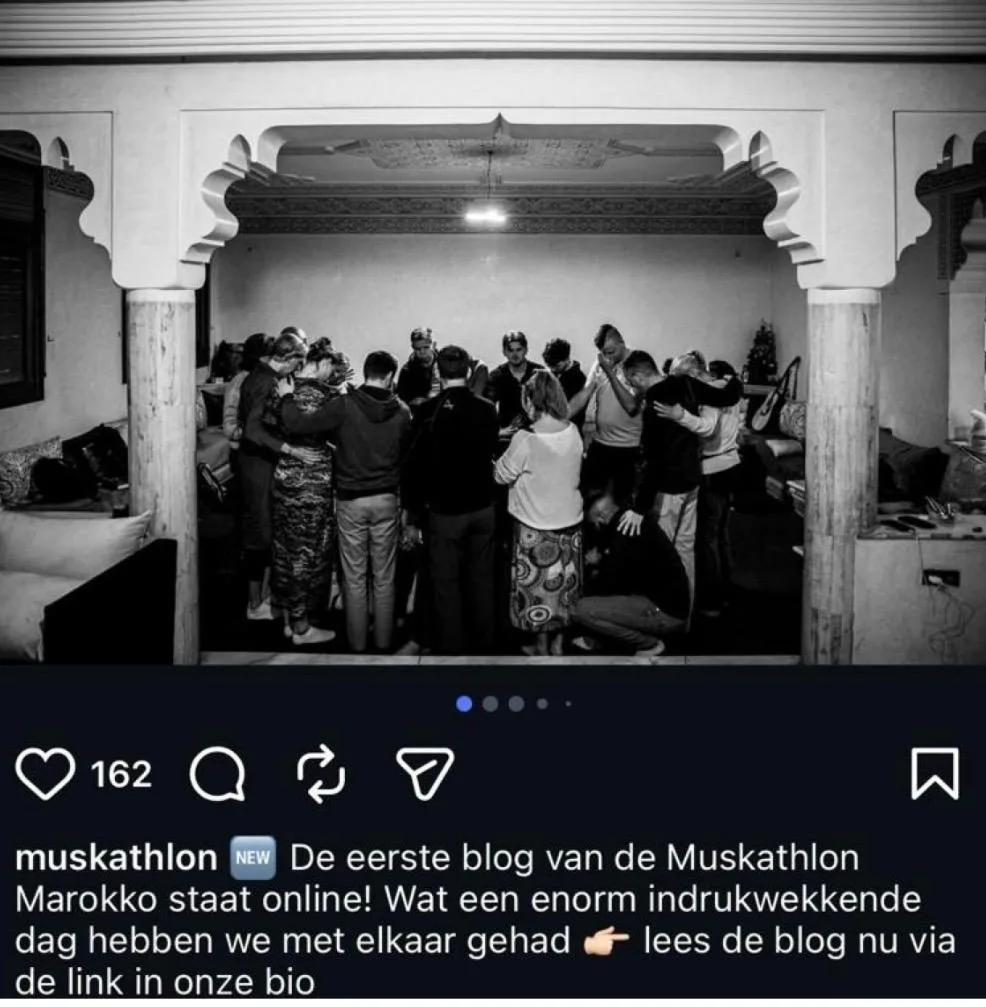
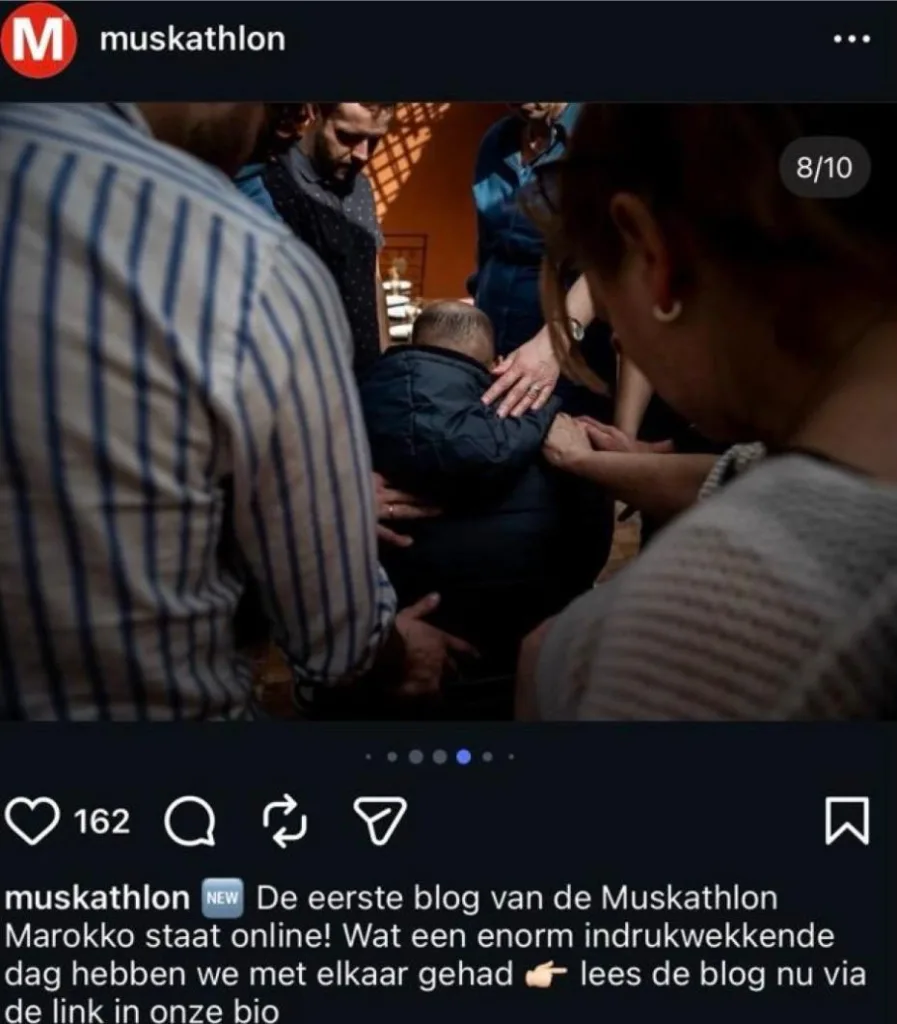
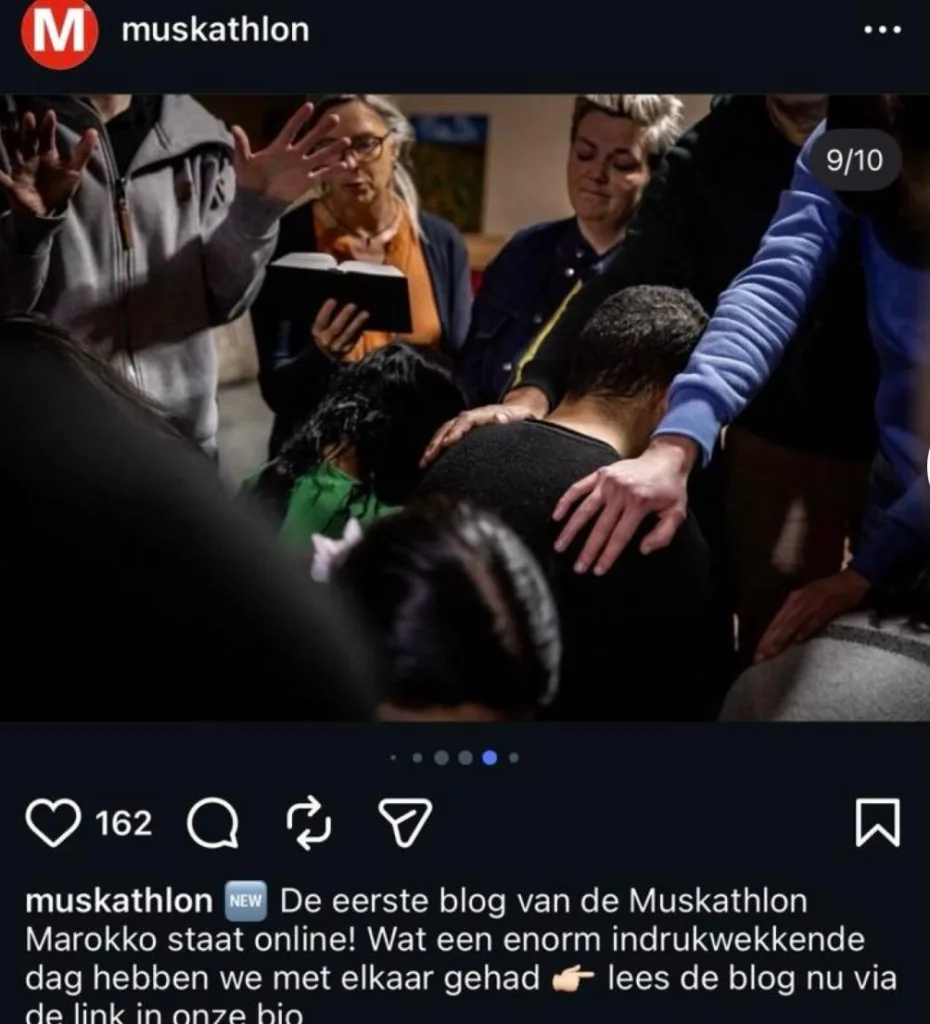
Previous and upcoming youth trips to Morocco, including the sold-out “Youthtrip North Africa” scheduled for August 2026, were promoted as joining the adventure of local converts who go door to door spreading the Gospel, with “essential materials distributed“ and visits to local projects supporting Christians.
Reported activities in Algeria and Bangladesh further indicate that Open Doors funds and promotes locals to fulfil its mission. In Bangladesh, Open Doors uses the Quran to inform Muslims about the Gospel via trainings comparing the Gospel with the Quran and teaching Muslims about Christ, and upon conversion, funds house church construction and livelihood sustainability.
MWN asked Open Doors how, given Morocco’s legal framework on religious activities and proselytization, it reconciles these trips with its mission statement that speaks of actively visiting countries to spread the message of Jesus. Open Doors declined to answer specific questions, referring instead to its generic statement.
Smuggling Bibles and Christian literature with highest activity in the Muslim world
In interviews and in his bestseller “God’s Smuggler,” founder Anne van der Bijl articulated an ethical stance on lying to authorities, which the book calls non-sinful lying. He says he does not consider bringing God’s word into a country to be smuggling. In fact, Open Doors, formerly named The Crusaders, boasts about its Bible smuggling activities. Since Muskathlon openly invites participants to follow in Van der Bijl’s footsteps and visit Morocco, MWN specifically asked the organizations to elaborate on the meaning and use of this wording. Again, no response was provided.
In its most successful operation, Operation Pearl, Open Doors smuggled one million Bibles into China. In 2014, the organization reported smuggling 3 million Bibles and Christian books into countries where they are banned or hard to reach.
In its 2025 annual report, Open Doors reported 4.1 million instances of ‘aid and support’ in North Africa and South West Asia. According to the report, that figure exceeds the totals reported for several other regions, including sub-Saharan Africa and Latin America (386K), and other parts of Asia (1.6M).
Open Doors distributed 1.2 million Bibles and 3.7 million biblical trainings in 2025. Open Doors translated the Bible into every language and is being distributed to all countries on its persecution list. Open Doors UK and Ireland alone have spent 654.310 British pounds (764K Euro or 8 million Moroccan Dirhams) to fund Bible books and other Christian resources.
According to the Dutch Charity Regulator (CBF), Open Doors Netherlands received over 20 million Euros worth of donations in 2025, of which 17.7 million Euros was spent on their purpose, and 78% was for evangelization and missionary work. These public recordings contradict Open Doors/Muskathlons’ response to MWN: “We are not a missionary organization”.
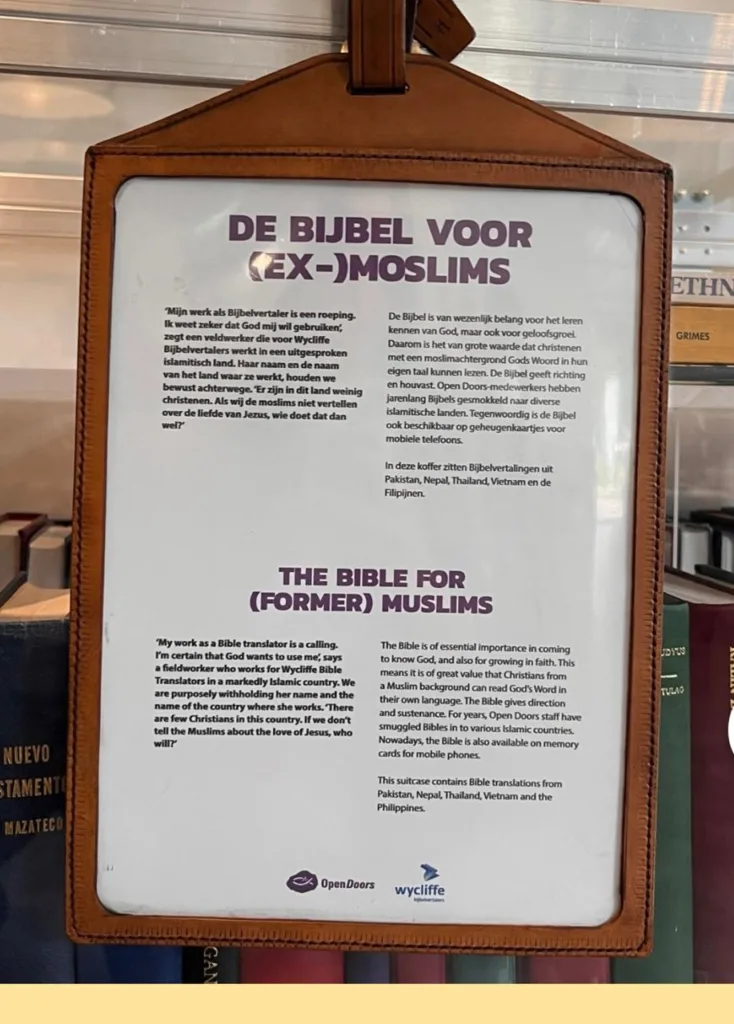
At their visiting center, Open Doors has a dedicated section of Bibles specifically for (ex)-Muslims with the description that their staff has been distributing Bibles into various islamic countries for years. Similar reports have also been made publicly by Open Doors Australia. In their Dutch YouTube promotional video, Open Doors explains how Bibles are “distributed in secret” to North Africa.
Going through Morocco Muskathlon participants’ public pages, participants state that their trips are joined with bible distribution and that the donated funds are used to align with the organization’s values and mission. Open Doors reiterated to MWN that they abide by Morocco’s law and do not perform any religious activities. Their statement contradicts their own mission and public records.
Legal analysis: personal practice is protected but organized distribution is not
To put these findings in context, MWN asked Moroccan lawyer Jad Berrada from Casablanca to explain the country’s rules on religious practice and proselytism. “If they respond to the conditions listed in Article 220, necessarily these reports constitute evidence against those who issue them,” the Moroccan lawyer said when asked whether an organization’s own published reports could matter in a legal case.
Moroccan law draws a clear line between private religious practice and the organized spread of religious material. Anyone, including foreign residents and diplomats, may legally own religious texts such as Bibles for personal use.
Open Doors does not deny that Morocco has legally registered churches, but its material claims that many Moroccan converts worship separately in house churches and that Open Doors distributes Bibles. Under Moroccan law, this choice makes no difference: spreading religious literature outside official channels remains banned.
The US Department of State made the same point in its 2008 International Religious Freedom Report. While Morocco’s Constitution guarantees freedom of worship, notes the report, the country’s government prohibits the distribution of non-Muslim religious materials and bans proselytizing.
Breaking Article 220 requires proof of intent. “The absence of this intentional element, meaning the certain and unequivocal intention to commit the legally proscribed act, can on its own be sufficient to dismiss the characterization of an infraction,” Berrada elaborated.
Punishment requires “the observation of a combination of actions manifestly aimed at shaking the faith of a Muslim or converting them to another religion” through methods banned by the penal code.
For organizations without registration, what matters most is public order, not paperwork. If an action is proven to be purely humanitarian, missing registration is a formality that can be fixed. As Berrada put it, “only actions that disrupt the social order are punishable. The principle is simple: To establish liability, you must prove the disturbance.”
In short, Moroccan law gives room for religious practice while banning unlawful proselytism. Rather than pushing hidden religious networks underground, Berrada concludes, the law seeks “to build bridges with our Christian brothers to foster dialogue.”
Obscurity, secrecy, and inconsistencies remain
Questions remain about why Open Doors publicly claims to abide by Morocco’s legal framework while actively pursuing its mission statement through its sports organization Muskathlon. If Open Doors abides by Moroccan law, as it claims, the secrecy surrounding its activities, the deleted travel blogs, and the consistent use of “North Africa” for a destination that its own promotional videos show to be Marrakech are difficult to explain.
So are the unsubstantiated claims spread by affiliated individuals, and the far-reaching labels attached to Morocco in an annual ranking without verifiable evidence. Open Doors’ mission, history, track record, and its own shared information about entering countries undisclosed as tourists raise the question of whether these organizations truly abide by Morocco’s law, or whether they act on their stated belief that God’s law is superior to that of a country.
Cards on the table
In an effort to better understand the deletion of pages and the organization’s operations in the region, MWN submitted detailed questions to Open Doors and Muskathlon regarding their fundraising campaigns, mission statement, travel itineraries, archived material, financial channels, and activities described in their own publications on June 1st, 2026.
Open Doors and Muskathlon refrained from addressing each question from MWN individually with supporting evidence. Instead, the organizations shared a joint statement on June 10, with MWN. “We offer the following statement rather than a point-by-point reply to protect the safety of those involved,” it said. MWN asked on June 11 to answer each question separately, which Open Doors/Muskathlon stood by its joint statement.
In engaging with the statement and other materials to put this report together, MWN decided not to share the open profiles and videos of the Open Doors/Muskathlon participants. Instead, we focused on the organizations and their operations, and assumed that participants communicate based on the information they receive in their briefing.
Open Doors was aware of MWN’s upcoming publication through the online scrutiny by an MWN reporter and repeated requests to answer specific questions. Yet the organizations declined to address these questions individually. They even deleted supporting pages upon questioning. Fortunately, MWN had already archived these pages.
MWN found no other way to verify the information the organizations publicly present. We therefore decided to have a reporter join a guided group tour at the Open Doors visitors center in the Netherlands without disclosing their journalistic capacity. The visit concerned a publicly accessible tour open to any member of the public. Its sole aim was to observe the information Open Doors disseminates to visitors.
The reporter did not ask questions about Morocco, did not steer the conversation, and made no vocal recordings, in accordance with the center’s rules. Only statements made openly by the guide and museum displays to the entire group were noted.