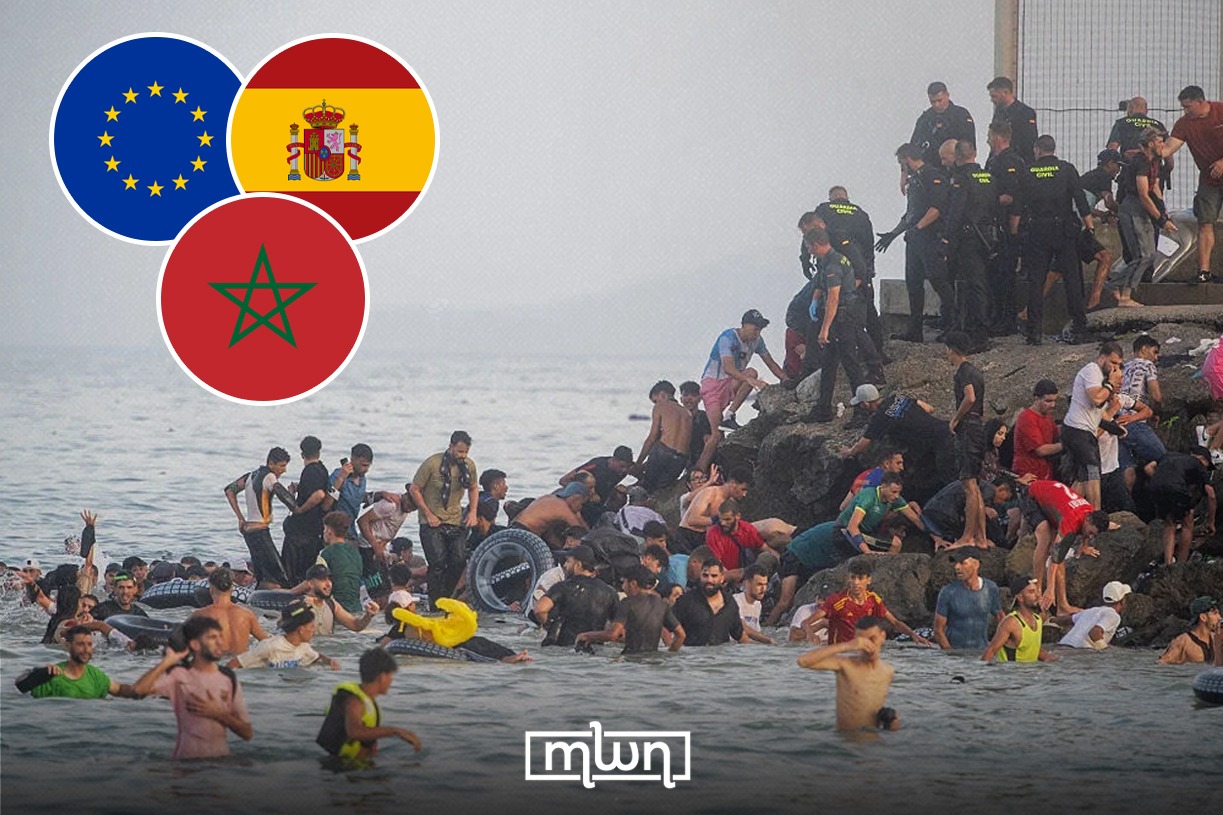
The migration surge into the Spanish enclave of Ceuta during the summer of 2026 illustrates the structural contradictions at the heart of European migration governance. Although public debate in Spain and across Europe rapidly attributed the influx to Morocco’s alleged relaxation of border controls, such an explanation is incomplete. The crisis resulted from the convergence of several factors: the European Union’s long-standing policy of externalizing migration control to neighboring countries, persistent diplomatic tensions between Morocco and Spain, and an important legal development within Spain itself—the Spanish Supreme Court’s ruling of June 2026 restricting the practice of summary returns of migrants intercepted at sea. Rather than representing a simple case of Moroccan coercion, the Ceuta episode demonstrates how legal, political, and institutional dynamics interact to produce migration crises (Castles et al., 2020; Chtatou, 2026a).
At its core, European migration policy rests upon a paradox. The European Union is simultaneously committed to protecting human rights, guaranteeing asylum under international law, and preserving the free movement of persons within the Schengen Area, while also seeking to prevent irregular migration across its external borders. Reconciling these objectives has proved increasingly difficult. Instead of strengthening its own border management capacities alone, the EU has progressively transferred many migration-control responsibilities to neighboring states, particularly Morocco, Tunisia, Libya, Mauritania, and Turkey. This process, widely known as externalization, shifts interception, surveillance, detention, and increasingly asylum management beyond European territory while allowing Europe to minimize the political costs associated with migration control (Lavenex, 2018; Geddes, 2021).
Europe’s border strategy: Outsourcing control beyond its borders
Externalization emerged gradually rather than through a single policy decision. The creation of the Schengen Area fundamentally transformed European border management. The abolition of internal borders among participating states necessitated stronger external controls to preserve freedom of movement within Europe. Consequently, European policymakers increasingly viewed neighboring countries as strategic buffers capable of preventing migrants from reaching European soil. Beginning with the 2002 Seville European Council and reinforced through subsequent agreements, migration management became integrated into broader diplomatic and development partnerships. Cooperation on border security became closely linked to financial assistance, trade relations, and development aid (Saddiki, 2022, as cited in Ferrer-Gallardo & Gabrielli, 2023).
Over time, this strategy expanded considerably. The EU Emergency Trust Fund for Africa, launched in 2015 following the Valletta Summit, ostensibly sought to address the root causes of migration through development assistance. In practice, however, much of the funding was directed toward strengthening border surveillance, improving security infrastructure, training security personnel, and enhancing interception capabilities across North Africa and the Sahel. Critics argue that these initiatives often prioritized migration containment over genuine socioeconomic development, effectively transforming humanitarian and development policies into instruments of migration control (Externalizing Asylum, 2026).
This institutional architecture reflects a profound asymmetry. Europe determines migration objectives while neighboring countries shoulder most operational responsibilities. States such as Morocco are expected to patrol extensive coastlines, police vast desert regions, dismantle smuggling networks, host large migrant populations, and absorb the humanitarian and political consequences of migration management. When migration flows remain low, these efforts receive little public recognition. Yet when border crossings increase, European political discourse frequently shifts blame onto transit countries, portraying them as either negligent or deliberately uncooperative. Thus, externalization simultaneously transfers responsibilities and redistributes political accountability away from Europe (Castles et al., 2020).
Morocco’s dual role: Migration partner and geopolitical actor
Morocco occupies a particularly important position within this framework because of its geographical proximity to Spain and its unique relationship with the Spanish enclaves of Ceuta and Melilla. Since the early 1990s, Morocco has become one of Europe’s principal migration partners. Bilateral cooperation intensified through the 1992 Spain-Morocco Readmission Agreement and expanded significantly after the Seville framework. European financial support has continued to increase, culminating in additional funding allocated in 2023 to strengthen Morocco’s capacity to combat migrant smuggling and reinforce institutional migration management (Externalizing Asylum, 2026).
However, Morocco’s cooperation has never been unconditional. Rabat consistently emphasizes that its contribution to European border security deserves political recognition and strategic consideration. At the same time, Morocco maintains its long-standing claim over Ceuta and Melilla, introducing an enduring element of geopolitical tension into migration cooperation. Consequently, migration management has become intertwined with broader diplomatic relations, particularly concerning the Western Sahara dispute. Border cooperation therefore functions not merely as a technical security arrangement but also as an important instrument of Moroccan foreign policy (Chtatou, 2026a).
Domestically, Morocco’s migration policy has undergone substantial transformation over the past decade. Until 2013, migration governance relied predominantly on security-oriented measures, including periodic arrests, forced relocations, and deportations of irregular migrants toward remote border regions. This approach changed significantly following recommendations issued by Morocco’s National Human Rights Council in 2013. Supported by King Mohammed VI, Morocco adopted the National Strategy on Immigration and Asylum (SNIA) in 2014, marking the first comprehensive migration policy implemented by any country in the Middle East and North Africa (Externalizing Asylum, 2026).
The SNIA represented a major policy shift by emphasizing migrant regularization, access to education and healthcare, labor-market integration, and institutional reform. Two large-scale regularization campaigns conducted between 2014 and 2017 granted legal status to approximately 45,000 migrants, many originating from sub-Saharan Africa (irregularmigration.eu, 2024). Morocco also revived its refugee administration and initiated procedures to regularize refugees recognized by the United Nations High Commissioner for Refugees. These reforms reflected Morocco’s aspiration to evolve from a simple transit country into both a destination country and a regional migration actor committed to humanitarian principles (GFMD, n.d.).
Nevertheless, Morocco’s migration governance remains characterized by an inherent duality. On the one hand, the country presents itself internationally as a humanitarian actor promoting migrant integration and human rights. On the other hand, it continues to cooperate closely with European security agencies in preventing migrants from reaching Europe. Critics argue that these two dimensions are contradictory, while others view them as complementary elements of Morocco’s broader diplomatic strategy. By combining humanitarian initiatives with effective border enforcement, Morocco enhances its international legitimacy while simultaneously increasing its bargaining power vis-à-vis the European Union (Chtatou, 2026b).
Comparisons with neighboring countries further highlight Morocco’s distinctive role. Unlike Libya, whose fragmented political system severely limits effective migration governance, or Tunisia, where domestic political instability has complicated migration cooperation, Morocco offers Europe relative institutional stability and a more coherent migration policy. This comparative advantage increases Morocco’s strategic importance while simultaneously reinforcing Europe’s dependence upon Moroccan cooperation (Externalizing Asylum, 2026).
The recurring crises at Ceuta vividly illustrate these structural dynamics. The events of summer 2026 were not unprecedented. Similar migration surges occurred in May 2021, when over 8,000 migrants entered Ceuta within two days, and again during 2022. The 2021 crisis is widely interpreted through Kelly Greenhill’s concept of coercive engineered migration, whereby states deliberately facilitate migration movements to exert political pressure on neighboring countries (Greenhill, 2010, as cited in Garcés Mascareñas, 2021). That episode followed Spain’s decision to admit Polisario Front leader Brahim Ghali for medical treatment, provoking strong diplomatic protests from Morocco. Shortly afterward, thousands of migrants crossed into Ceuta with what many observers interpreted as tacit acquiescence by Moroccan security forces (Garcés Mascareñas, 2021).
Similar patterns have appeared elsewhere. Turkey’s temporary opening of its border with Greece in 2020 likewise demonstrated how migration can become an instrument of diplomatic leverage. Such cases reveal an important paradox inherent in externalization: by outsourcing border control, Europe becomes structurally dependent upon the cooperation of third countries. Because neighboring states perform functions that Europe increasingly relies upon, they inevitably acquire leverage over European migration policy. Border control becomes not solely a security function but also an important bargaining instrument within broader diplomatic negotiations (Garcés Mascareñas, 2021).
Spain’s legal shift and the new dynamic of the Ceuta crisis
Yet the 2026 Ceuta crisis differs significantly from the events of 2021. While diplomatic tensions remained relevant, they cannot fully explain the sudden increase in crossings. A second, largely independent factor fundamentally altered the migration landscape: the Spanish Supreme Court’s judgment of 29 June 2026 concerning summary maritime returns. This legal development originated entirely within Spain’s domestic legal system and substantially narrowed the government’s ability to immediately return migrants intercepted while swimming toward Ceuta or Melilla.
The Court ruled that migrants intercepted at sea could no longer be subject to the expedited “hot return” procedure because they had not crossed the physical border infrastructure contemplated by Spanish immigration legislation. Instead, they became entitled to ordinary administrative procedures, including identification, legal assistance, and the opportunity to seek international protection (El Constitucional, 2026; EJIL:Talk!, 2026). Although the judgment did not grant migrants an automatic right to remain in Spain, it fundamentally altered the legal framework governing maritime arrivals.
This judicial ruling introduced a powerful new variable into migrant decision-making. Migration scholars have long argued that migration decisions depend not only upon conditions in countries of origin but also upon perceptions of legal opportunities in destination countries. Information concerning changes in asylum procedures or return policies circulates rapidly through migrant networks and smuggling organizations. Consequently, even procedural legal reforms can significantly influence migration behavior by altering expectations regarding the likelihood of remaining in Europe after arrival (Castles et al., 2020).
The timing of the Supreme Court’s judgment immediately before the summer migration surge strongly suggests that legal developments within Spain contributed significantly to the events of 2026. Indeed, the Spanish government’s subsequent proposal to install floating maritime barriers around Ceuta indicates official recognition that the Court’s decision had substantially weakened existing border management practices (CNN, 2026).
Rethinking Europe-Morocco migration cooperation
The Ceuta crisis therefore cannot be adequately understood through narratives exclusively emphasizing Moroccan responsibility. Instead, it reveals the interaction of three structural factors: Europe’s externalization strategy, Morocco’s geopolitical leverage, and Spain’s evolving legal framework. Together, these dynamics expose the limitations of simplified explanations centered solely on political blame and underscore the need for more comprehensive analyses of contemporary migration governance.
The Spanish Supreme Court’s judgment of 29 June 2026 represents one of the most significant legal developments affecting migration governance at the Spanish-Moroccan frontier in recent years. The Court considered the case of an Algerian migrant intercepted while attempting to reach Ceuta by swimming and concluded that the practice of summary maritime returns—commonly referred to as devoluciones en caliente (“hot returns”)—could no longer be applied to migrants intercepted at sea (El Constitucional, 2026; Legal Chronicle, 2026).
The Court’s reasoning rested upon a careful interpretation of Spain’s Immigration Law. The expedited rejection procedure introduced in 2015 applies only to migrants who overcome physical border infrastructure such as fences or gates surrounding Ceuta and Melilla. Individuals intercepted while swimming toward Spanish territory do not physically cross these “containment elements” and therefore fall outside the scope of the exceptional procedure. Consequently, they must instead receive ordinary administrative processing, including identification, legal representation, and access to asylum procedures where appropriate (EJIL:Talk!, 2026).
Although the ruling did not grant migrants an automatic right to remain in Spain, its practical consequences were considerable. Ordinary immigration procedures require time, administrative resources, and legal safeguards that differ substantially from immediate removal. Processing asylum claims may take months or even years, creating perceptions among prospective migrants that maritime crossings now offer greater prospects for remaining within Spain long enough to pursue legal protection (CNN, 2026).
From the perspective of migration theory, this development illustrates an important but often overlooked dimension of migration systems. Migration decisions are rarely determined exclusively by poverty, armed conflict, demographic pressure, or unemployment in countries of origin. Equally important are perceptions regarding the legal environment awaiting migrants at their destination. Information concerning judicial decisions, asylum procedures, and enforcement practices spreads rapidly through family networks, migrant communities, and increasingly through social media and smuggling organizations. Consequently, legal reforms themselves become structural “pull factors” capable of influencing migration behavior independently of changes in physical border enforcement (Castles et al., 2020).
This observation should not be interpreted as criticism of the Supreme Court’s judgment. Courts are entrusted with safeguarding constitutional guarantees and ensuring compliance with international legal obligations, particularly the principle of non-refoulement, which prohibits returning individuals to territories where they may face persecution or inhuman treatment. Spain’s obligations derive not only from domestic legislation but also from the 1951 Refugee Convention, the European Convention on Human Rights, and the Charter of Fundamental Rights of the European Union. The Supreme Court therefore acted within its constitutional role by clarifying the limits of executive discretion regarding border enforcement (EJIL:Talk!, 2026).
The broader significance of the ruling lies elsewhere. It demonstrates that migration crises cannot be understood exclusively through the behavior of transit states such as Morocco. Domestic legal developments within receiving countries may substantially alter migration dynamics by reshaping incentives perceived by potential migrants. Consequently, explanations that attribute the entire Ceuta crisis to Moroccan policy overlook an essential component of the causal chain.
Who bears responsibility for Ceuta?
Indeed, the politics surrounding the Ceuta episode illustrate what might be termed a politics of blame. Public discourse in receiving countries often favors explanations centered upon the alleged misconduct of external actors because such narratives shift responsibility away from domestic institutions. Accusing neighboring states of deliberately “opening the gates” is politically simpler than examining how judicial decisions, administrative shortcomings, asylum procedures, or broader European migration policies may have contributed to the situation. External attribution therefore functions as a politically convenient mechanism for avoiding domestic accountability.
This tendency is reinforced by contemporary media dynamics. Dramatic images of migrants swimming toward Ceuta or climbing border fences naturally attract public attention. Visual narratives emphasizing diplomatic confrontation or alleged foreign manipulation are easier to communicate than detailed explanations concerning statutory interpretation or administrative law. Consequently, legal developments often receive comparatively limited attention despite their potentially decisive impact upon migration patterns. The result is a simplified public understanding in which migration crises appear primarily as consequences of foreign behavior rather than manifestations of complex institutional interactions.
Such simplification obscures the multi-causal nature of migration itself. Modern migration systems are shaped by numerous interconnected variables operating simultaneously. Conditions in countries of origin—including economic inequality, political instability, environmental degradation, demographic pressures, and violent conflict—interact with opportunities available in destination countries. Transit states contribute additional variables through border management practices, while legal reforms, labor-market demands, asylum policies, and diplomatic relations further influence migration decisions. No single variable adequately explains migration movements; rather, migration emerges from the interaction of these multiple structural forces (Castles et al., 2020).
The Ceuta events therefore illustrate the limitations of explanations relying exclusively on the “weaponization of migration” thesis. Although Morocco undoubtedly possesses the capacity to influence migration flows by adjusting enforcement intensity, such capacity does not imply that every migration surge reflects deliberate state strategy. The 2026 crisis differed fundamentally from the events of 2021 because an independent legal development significantly altered Spain’s own migration framework. Ignoring this domestic factor produces an analytically incomplete account.
At the same time, Morocco’s position within the migration system has itself evolved considerably. The country now occupies three distinct roles simultaneously. It remains a country of emigration, as many Moroccan citizens continue seeking opportunities abroad. It also functions as a transit country for migrants originating elsewhere in Africa. Increasingly, however, Morocco has become a destination country in its own right, with tens of thousands of regularized migrants residing legally within its territory under the National Strategy on Immigration and Asylum (Chtatou, 2026b).
This triple identity complicates Morocco’s relationship with European migration policy. European discourse often portrays Morocco primarily as Europe’s “gatekeeper,” responsible for preventing African migration toward the continent. Yet Morocco increasingly pursues migration policies shaped by its own domestic interests, humanitarian commitments, demographic realities, and diplomatic priorities. Consequently, cooperation with Europe cannot be understood merely as outsourced border management but rather as part of a broader negotiation concerning sovereignty, development, security, and regional influence.
The asymmetry inherent in the externalization model nevertheless remains evident. Europe largely defines migration objectives while neighboring countries absorb many operational costs. Morocco deploys substantial financial, institutional, and human resources to patrol coastlines extending thousands of kilometers, combat smuggling networks, host migrant populations, and manage humanitarian emergencies. European financial assistance helps offset some expenditures but does not fundamentally alter the unequal distribution of responsibilities.
Toward a more balanced migration partnership
Moreover, migration management increasingly resembles commercial outsourcing. Operational tasks are delegated to external partners while political accountability largely remains within Europe. When border management succeeds, European institutions claim policy effectiveness. When failures occur, responsibility is frequently attributed to neighboring states. Such arrangements inevitably generate instability because outsourced partners retain considerable leverage over the services they provide. Cooperation based primarily upon financial incentives may be strengthened, relaxed, or renegotiated according to changing political circumstances.
The Ceuta crisis therefore raises broader questions concerning the sustainability of externalization itself. While outsourcing border management may reduce immediate political pressures within Europe, it cannot eliminate the structural drivers of migration. Economic disparities between Europe and Africa remain substantial. Armed conflicts continue to displace populations across the Sahel and beyond. Climate change increasingly affects livelihoods, particularly in vulnerable regions. Demographic growth in many African countries continues to outpace employment opportunities. Border enforcement alone cannot address these underlying realities.
Consequently, a more balanced partnership between Europe and Morocco requires moving beyond crisis management toward longer-term strategic cooperation. Several priorities emerge from the analysis.
First, European financial assistance should emphasize durable institutional capacity rather than reactive emergency funding. Crisis-driven disbursements encourage short-term responses instead of sustainable migration governance. Long-term investments in administrative institutions, asylum systems, education, and employment opportunities would produce more resilient outcomes (Externalizing Asylum, 2026).
Second, migration cooperation should include expanded legal pathways for mobility. Seasonal labor schemes, educational exchanges, humanitarian admissions, and more efficient asylum procedures would reduce dependence upon irregular migration while responding to labor-market needs within Europe. International organizations including UNHCR, IOM, and UNICEF have repeatedly emphasized that safe and legal migration opportunities constitute an essential complement to border enforcement (Legal Chronicle, 2026).
Third, greater legal coherence is required between migration-control policies and international human rights obligations. The recurrent litigation surrounding border practices demonstrates that existing legal frameworks often remain ambiguous. Clarifying procedures before crises emerge would strengthen both legal certainty and operational effectiveness.
Fourth, Europe should embrace genuinely shared political responsibility for migration governance. Migration is not solely Morocco’s challenge nor solely Europe’s. It represents a transnational phenomenon requiring joint planning, coordinated institutions, and mutual accountability. Blame-centered narratives obscure rather than resolve underlying structural problems.
Finally, migration cooperation cannot be completely separated from broader diplomatic relations. Questions concerning Western Sahara, as well as Morocco’s longstanding claims regarding Ceuta and Melilla, continue to influence bilateral relations between Rabat and Madrid. As long as migration remains one of Morocco’s most effective instruments of diplomatic leverage, broader political disagreements will periodically shape border cooperation. A more stable migration partnership therefore requires sustained political dialogue extending beyond migration itself.
Ultimately, the Ceuta migration surge demonstrates that externalization is not a substitute for comprehensive migration policy. Outsourcing border enforcement may temporarily reduce irregular arrivals, but it does not eliminate the structural forces driving migration. Nor does it remove Europe’s legal obligations under international refugee law or human rights conventions. Instead, externalization redistributes responsibilities across international borders while leaving fundamental tensions unresolved.
The events of 2026 reveal the interaction of three interconnected dynamics: the structural asymmetry created by decades of European externalization; Morocco’s growing geopolitical importance as Europe’s principal southern migration partner; and significant legal developments within Spain’s own judicial system. Together, these factors produced a migration crisis that cannot be explained through monocausal narratives centered exclusively upon Moroccan policy.
The principal lesson of the Ceuta episode is therefore broader than the crisis itself. Sustainable migration governance requires acknowledging migration as a shared regional challenge rather than a problem that can simply be outsourced to neighboring states. Security considerations remain legitimate, but they must be reconciled with legal obligations, humanitarian responsibilities, and long-term investments addressing migration’s underlying causes. Only such a balanced framework can reduce the recurring cycles of crisis, blame, and political confrontation that have increasingly characterized Euro-Mediterranean migration relations.