
Rabat – Morocco’s September 23 legislative elections proceeded under normal conditions, with the number of complaints recorded during the electoral process falling significantly compared with the 2021 elections, according to the Public Prosecution.
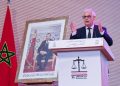
Murad Alami, head of the Public Prosecution’s Public Action and Criminal Policy Implementation Monitoring and Crime Analysis Division, said Friday that the 2026 elections were conducted normally and adequately.
Public prosecutors received 403 complaints related to the elections, compared with 1,071 complaints recorded during the 2021 elections.
Alami said the complaints were submitted either directly to public prosecution offices or electronically through digital platforms developed by the Public Prosecution to allow citizens to file complaints remotely.
The highest number of complaints was recorded on election day itself, he said.
Investigations completed within 48 hours
Alami said judicial investigations into the complaints were conducted with the required precision and efficiency, while also taking into account the need for rapid action during the electoral period.
The average time required to complete the investigations did not exceed 48 hours, according to the official.
An analysis of the electoral violations reported to public prosecution offices showed that most involved ordinary criminal offenses allegedly committed during election campaigns, including violence, verbal abuse, and violations of privacy.
Authorities also recorded an increase in offenses committed through electronic means, particularly social media.
Several complaints involved alleged defamation and violations of private life. Judicial investigations were opened in these cases, with legal proceedings initiated against those allegedly responsible, Alami said.
Four complaints over election records
Regarding complaints over the failure to provide copies of election records to candidates’ representatives, Alami said the cases were limited in both number and geographic scope.
Four complaints were recorded in the electoral districts of Guelmim, Fahs-Anjra, Souk El Arbaa, and one other local electoral district, according to the Public Prosecution.
Judicial investigations were opened, and legal measures were taken. Two of the complaints were dismissed due to the absence of evidence establishing a criminal offense, while two remained under investigation.
Alami noted that Article 57 of the organic law governing the House of Representatives establishes the procedure for obtaining copies of election records. Under the provision, polling station heads are required to provide copies to representatives of candidates who are present when the records are prepared.
He explained that the offense relating to failure to provide copies requires a specific legal condition: the candidate’s representative must be present at the polling station when the record is being prepared.
If a representative leaves the polling station and returns after the vote counting and preparation of the record have been completed, the legal elements required to establish the offense are not met, Alami said. In such circumstances, prosecution cannot be initiated in the absence of that essential legal condition.
The Public Prosecution directly monitored the September 23 election process, following its different stages and applying the relevant legal provisions, with the stated aim of ensuring that the elections proceeded in accordance with the rules governing the electoral process.