Join on WhatsApp
 Join on Telegram
Kenitra – Eid al-Fitr is the first holiday that Muslims around the world celebrate on the first day of Shawwal (the tenth month of the Islamic lunar calendar).
Eid al-Fitr comes after fasting for the month of Ramadan, and it is the first day Muslims break their fast. The holiday’s name roughly translates to “The Festival of Breaking Fast.” Fasting during Eid al-Fitr is therefore “forbidden,” and the festivities usually last for three days.
Eid al-Fitr doesn’t begin until the new moon appears in the sky. Technically, that means that across the world, Eid al-Fitr starts at different times and even on different days, depending on the location of the observing committee.
To make it more standardized, some Muslims celebrate Eid when the new moon appears over Mecca instead of their own country. Morocco has its own observing committee, and the sighting usually announces Eid a full day after that of most Middle Eastern countries.
This year, Egypt, Morocco, the UAE, and Saudi Arabia all celebrate Eid al-Fitr today. Some countries will celebrate tomorrow, while others did so yesterday.
On the morning of Eid, Muslims gather in large open public spaces arranged for the occasion to perform the Eid prayer, a tradition that Moroccans will unfortunately miss for the second year in a row due to the COVID-19 pandemic.
Read also:In Pictures: Morocco Ready for Eid Al Fitr, Shopping for Traditional Attire
Although the morning Eid prayer and the customary closing sermon are a lyrical and spiritual experience for many Muslims, it is important to try and keep the tradition alive within the home, among family members.
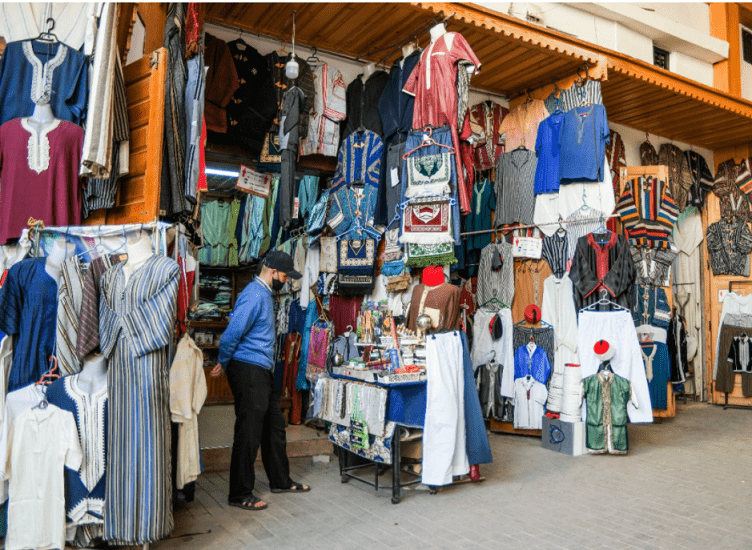
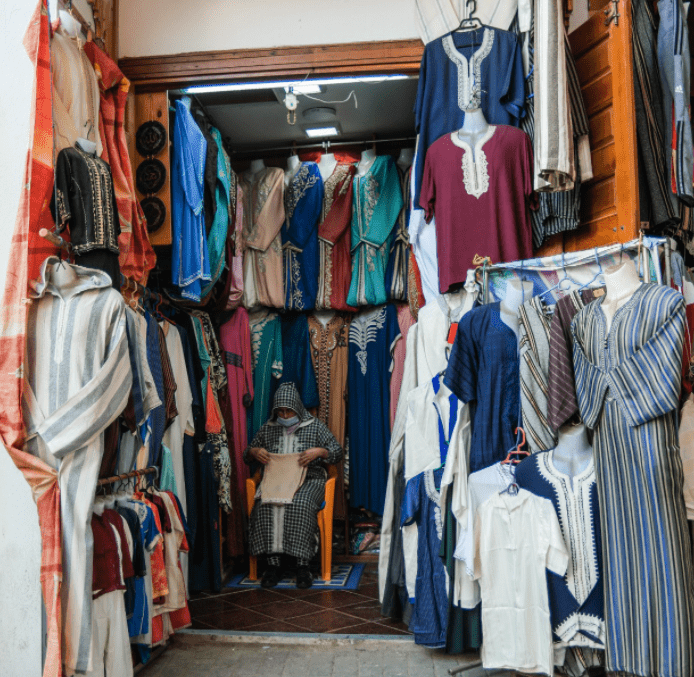
Before leaving to perform morning prayers, Muslims perform extended ablutions. Then often wear new or traditional garments specifically acquired for the Eid celebration. In Morocco, the most popular Eid outfits are usually djellabas for men, and caftans for women.
After 29 days of fasting, Muslims indulge in food and drink again, and Moroccans in particular tend to go all out, and the three festive days are about sharing and bonding.
The food ranges from traditional sweets and pastries for breakfast, to flavorful meat dishes or traditional Moroccan couscous for lunch, followed by a succulent tea time, and a large dinner.
Islamic traditions within many communities also emphasize the importance of family gatherings as part of the Eid al-Fitr celebrations. Moroccans are no exception, celebrating Eid by meeting and exchanging congratulations and gifts among families.
The days before Eid people often travel to be with their loved ones. But once again, this year sees restricted movement due to the COVID-19 crisis.
The spiritual wisdom of Eid al-Fitr
Beyond the sensory pleasures tempered by the holy month of Ramadan, Eid al-Fitr emphasizes many of the social and humane foundations of Islam.
The holy occasion is a reminder to all Muslims of the importance of community and solidarity, two concepts recognized among some of the most crucial pillars of the faith.
This is beautifully illustrated in the emphasis to share the Eid joy and the necessity to make it reach and encompass every household. Muslims are encouraged to share joy and happiness as a group — to strengthen the intellectual, spiritual, and social ties among Muslims around the world.
As for the humane meaning of Eid, it is best portrayed through the Zakat al Fitr.
Zakat al-Fitr is a donation for the least fortunate, required of all Muslims in financially-able households. Zakat is distributed at the end of Ramadan. This practice is a pillar of the Mulsim faith, and is a necessary step to close the cleansing process in this period of the Islamic year. It is the most beautiful part of the festivities and practiced with great love.
Moroccans also affirm pleasure as prescribed by the sunna (Islamic tradition), through singing, playing musical instruments, and practicing all kinds of celebratory amusements.