 Join on WhatsApp
 Join on Telegram
Rabat – Five years after the World Health Assembly (WHA) launched “the Global Action Plan on Antimicrobial Resistance,” Morocco must get behind its goals of raising public awareness of antibiotic resistance.
The WHA, the decision making body of the WHO, boldly opted for a holistic and sustainable approach to promoting global action against antibiotic resistance. However, by 2017, fewer than 80 countries, all WHO member states, had developed a clear national strategic vision on antimicrobial resistance (AMR).
AMR refers to bacteria and viruses that are able to fight antibiotics and other antimicrobials. “As a result, standard treatments become ineffective, infections persist and may spread to others,” the WHO says.
WHO launched the Global Antimicrobial Resistance Surveillance System (GLASS) in 2015 to harmonize the sharing, collecting, and analyzing of data on bacteria that cause infections in humans.
By the end of July 2017, only 42 countries had enrolled in GLASS, and Morocco was not one of them. According to GLASS’s first report, both high and low income countries suffered from high levels of antibiotic resistance to common bacterial infections.
So where does Morocco stand on antibiotics?
Too easily accessible
When it comes to controls on the consumption of antibiotics, the North African kingdom is lagging behind. What are the factors of antibiotic use within the local context in Morocco?
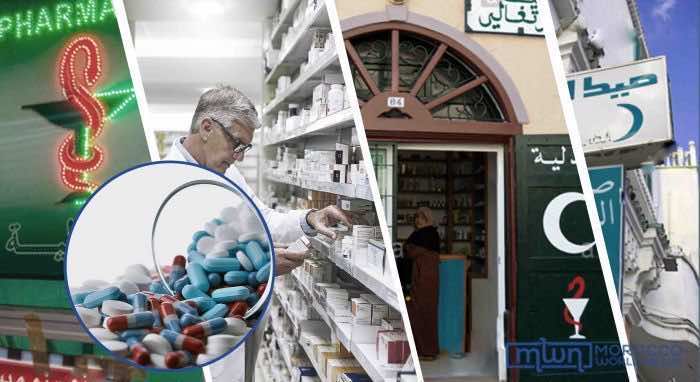
First, one of the distinctive features of the use of antibiotics in Morocco is the easy access to self-medication. Individuals can self-medicate and request antibiotics at pharmacies without a prescription either after consulting the pharmacist or simply deciding that he or she needs antibiotics without medical consultation.
Researchers found that the use of antibiotics in Morocco was increasing in the decade leading up to 2012.
Danger of overuse
Even though consumers in Morocco do not see antibiotics displayed on supermarket shelves, as is the case for vitamins in the US, they are easily accessible on request in most pharmacies or by simply showing the name of the antibiotic on a smartphone.
Without a doubt, getting antibiotics in Morocco is not always contingent on a medical prescription.
Medical professionals have agreed that the behavior of both patients and physicians may contribute to the normalization of overmedication through antibiotics. The need prescribe antibiotics on a case by case basis is relegated to the back burner.
Overuse and improper use of antibiotics cause AMR.
Read also: Morocco to Punish Private Hospitals Overcharging for Medicine
The overuse of antibiotics can even weaken the immune system. A study conducted by Harvard and MIT in 2017 on how antibiotics affect mice found that “the drugs are producing changes that are actually counterproductive to the treatment effort. They reduce the bacterial susceptibility to antibiotics, and the drugs themselves reduce the functional benefit of the immune cells,” in the words of the study’s lead author, James Collins.
There is a looming risk of the spread of nosocomial diseases and hospital-acquired infections. In such cases, a simple urinary tract infection could be fatal if AMR prevents the efficacy of an antibiotic.
In a bit of goods news, the Centers for Disease Control (CDC) reported that drug-resistant microbe-related deaths had decreased in the US in 2019 compared to 2013.
Yet the CDC points out, “The emergence and spread of new forms of resistance continues to alarm CDC experts.”
Animals use antibiotics, too
Humans are not the only consumers of antibiotics. Over the past few years, it has become accepted practice for cattle farmers, vying for the best milk and meat production, to use antibiotics in their cows.
An FAO study on dairy development in Morocco (2011) confirmed the use of antibiotics on cows by reporting on dairy processors’ “strict instructions to destroy raw milk batches containing antibiotics.”
Overuse of antibiotics by farmers and physicians alike thwart global efforts to prevent AMR, because the more antibiotics are disseminated, the harder it is to prevent resistance.
In addition to cultural and medical factors, economics have a part to play in the unbalanced consumption of antibiotics in Morocco.
Some Moroccan medical sales representatives have alleged that the pharmaceutical industry in the North African country exerts “soft pressure” on physicians to boost the sales of antibiotics and other medicines. For these experts, it is, after all, up to doctors to decide which medicines to prescribe liberally and which ones to save as a last resort.
Read also: Minister: Five Suspected Cases in Morocco Were Not Coronavirus
All is not gloom and doom
Meeting these challenges will not be as complex as it might seem because Morocco has already vowed to undertake a collaborative approach across its different public agencies and institutions. It has also taken steps to align itself with various international objectives, such as the UN Sustainable Development Goals.
However, a balanced consumption of antibiotics depends on an absolute change of mindset at a grassroots level, as well as in the health sector.
In terms of milk, meat, and agri-food products, not having the financial means to supplement nature may be a blessing in disguise. The poorer Moroccan farmers and herders who cannot afford to buy antibiotics and pesticides are now the producers of a luxury product, coveted by consumers in many Western countries as “organic” products.
Although it may be a leap, reducing the consumption of unnecessary antibiotics could well contribute to environmental protection and be a stepping stone to combating climate change.
Morocco can sidestep serious health difficulties simply by opting for a rationalized use of antibiotics for humans and a responsible and prudent application of these medicines for animals.
Edited by Madeleine Handaji and Susanna Spurgeon