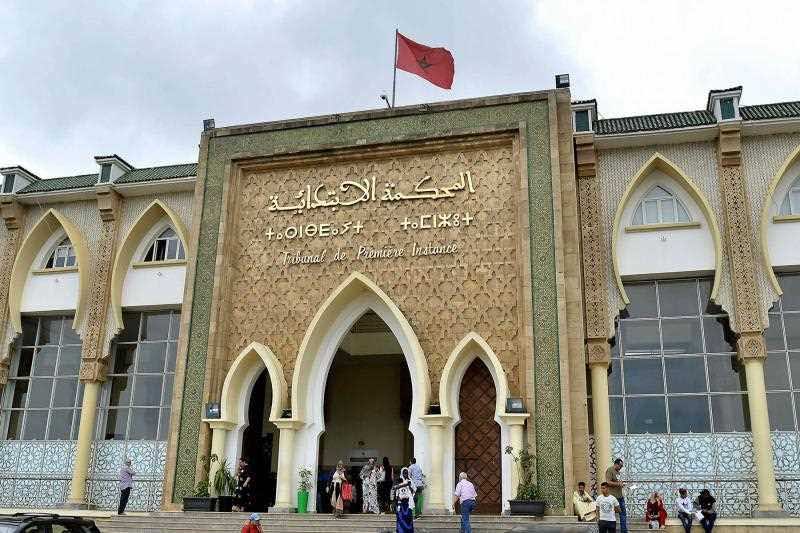
Denver – Morocco’s President of the Public Prosecution has ordered the General Prosecutor of the King at the Rabat Court of Appeal to begin a government probe into “false [spying] allegations” that have been leveled against the Moroccan government.
The order comes in response to accusations by various advocacy NGOs and foreign news companies that Morocco used the controversial Pegasus spyware to illegally spy on persons of interest, including journalists, political activists, and foreign dignitaries.
Reports of the spyware’s usage originated from Forbidden Stories, a consortium of 17 media organizations. The group claims that the “zero click” spyware was used by Morocco to spy on a number of persons of interest both in Morocco and abroad.
In addition to journalists and political activists, both Morocco’s King Mohammed VI and France’s President Emmanuel Macron are reported to have been targeted by the alleged invasive attack.
But the Moroccan government has already released a communique strongly denying the allegations. It notably deplored that the foreign NGOs and media organizations spreading such “baseless allegations” continue to smear the country’s reputation despite their inability to provide conclusive evidence corroborating their “unfounded accusations.”
Morocco’s General Prosecutor has instructed the country’s Judicial Police to investigate the accusations further, so that “responsibilities can be determined,” Morocco’s state media reported.
Although Pegasus was originally designed to be used against terrorist groups and organized crime networks, recent reports have indicated the program has found widespread use by governments around the globe to spy on activists, journalists, and political rivals.
Several French outlets operating in Morocco have since claimed that some of their journalists have been attacked by the software, according to France 24. These include Le Monde, Agence France-Presse, and France 24 itself. French prosecutors announced Tuesday that they would begin investigations into Morocco based on these claims.
Speaking at a parliamentary hearing on Tuesday, French Prime Minister Jean Castex said that the spying allegations levelled at Morocco are under investigations by a specialized team to assess the validity of the claims and the extent and depth of the alleged spying operation.
When asked by an MP from the far-left France Insoumise party whether his government will hold Morocco accountable for “challenging our sovereignty and independence” by “spying on a number of French journalists,” Castex replied that there is so far no evidence in favor of the cyber attack allegations.
“We have ordered investigations into the materiality of these claims. These investigations have not been completed and it is therefore not possible for me to speak at this stage,” Castex said.
Meanwhile, former head of the French Central Directorate of Domestic Intelligence (DCRI) Bernard Squarcini has cast serious doubt on the Pegasus Project story by suggesting that Morocco is highly unlikely to have spied on both President Macron and other senior French officials.
“[The accusation] is too easy,” Squarcini said, arguing that there is a high probability that Morocco is an easy target to smear in a story that is not remotely the one that the Forbidden Stories consortium has so far been telling.
But French media groups have continued to accuse Morocco of using the Israeli-made Pegasus spyware to eavesdrop on French President Macron.
As foreign (mainly French) media unrelentingly cover Morocco’s alleged cyber attacks on Macron and various French figures, the Moroccan government has maintained its denial of what it sees as “unfounded claims” aimed at tarnishing the country’s reputation and the liberal reforms and social developments efforts it has made in recent years.
The government also maintains it will take legal actions against the parties it assesses to be responsible for producing the allegations. And with both French and Moroccan authorities ordering separate probes into allegations by the Pegasus Project, it remains to be seen to what extent the group’s theses are factual or disingenuous.