
 Join on WhatsApp
 Join on Telegram
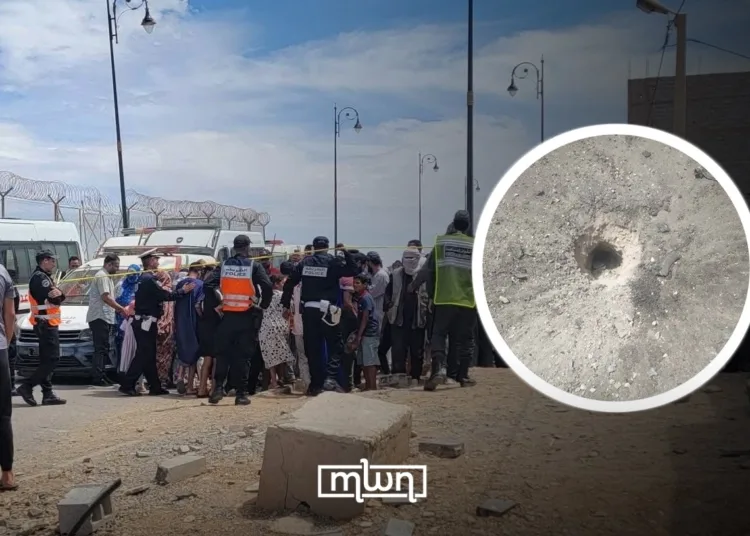
Rabat – An armed attack on May 5 at the southern Moroccan city of Smara, when the Polisario Front fired three projectiles, has revived debate on security dynamics across the Sahara and the wider Sahel region. The episode has drawn attention to the separatist Polisario Front and its implications for regional stability. It has also prompted renewed discussion in the US over its possible classification under counterterrorism law.
The attack on Smara occurred against a backdrop of accelerating international consolidation around Morocco’s position on the Western Sahara dossier. An increasing number of states, including major global actors and several European Union members, have articulated explicit support for Morocco’s Autonomy Plan, describing it as a serious, credible, and politically pragmatic framework for the dispute’s resolution.
In parallel, a growing wave of diplomatic recalibration has reshaped recognition patterns regarding the Polisario Front’s self-proclaimed Sahrawi Arab Democratic Republic (SADR). Several countries, including Mali among the most recent, have withdrawn recognition and reaffirmed support for Morocco’s sovereignty over Western Sahara, signaling a broader realignment in regional and international positioning.
This evolving diplomatic architecture has reinforced Morocco’s strategic posture while contributing to a progressive contraction of the Polisario Front’s external legitimacy. It has also placed Algeria and the Polisario in a more constrained diplomatic environment, as an expanding segment of the international community increasingly converges around Morocco’s Autonomy Plan as the most viable and durable basis for a political settlement.
‘Smara attack is a clear ceasefire breach’
Mohammed Bentalha Doukkali, Director of the National Center for Studies and Research on the Sahara and Professor of Political Science at Cadi Ayyad University, told Morocco World News (MWN) in an interview that the attack fits into a broader pattern of repeated ceasefire violations that undermine diplomatic efforts and raise serious legal concerns.
He detailed the attack precisely, noting that “several projectiles fell near the city of Smara. Observers recorded that the first landed in front of the city’s local prison, the second behind the same facility, while the third fell in an open area with no human or material damage reported.”
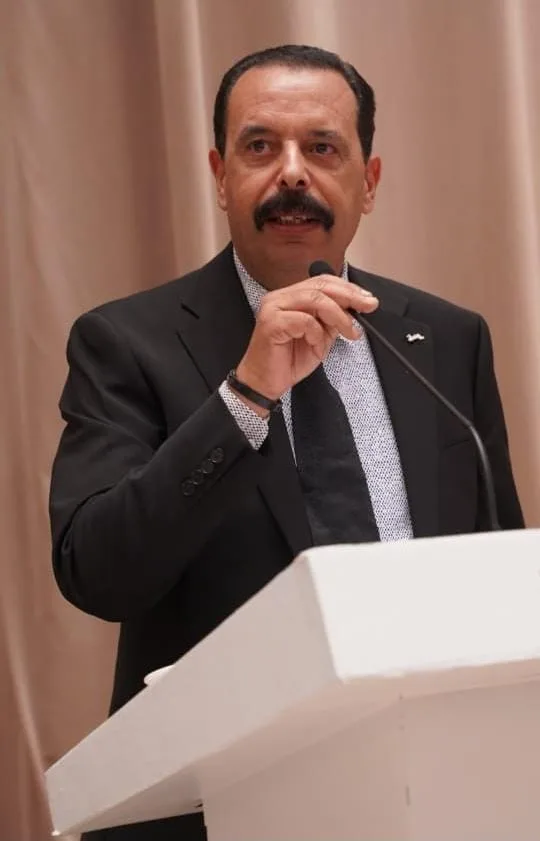
According to Doukkali, the episode cannot be reduced to an isolated security event. He directly attributed responsibility to separatist Polisario militias, describing the attack as a deliberate breach of established agreements. In his words, it constitutes “a clear breach of the ceasefire agreement and international humanitarian law,” and it “contradicts efforts aimed at achieving a peaceful solution to the dispute over the Moroccan Sahara.”
Repeated attacks and escalating security concerns
The recent Smara attacks add to a series of similar episodes that, in Doukkali’s reading, point to a sustained pattern of armed activity rather than isolated confrontations. This repetition, he suggests, weakens the credibility of ceasefire frameworks and raises questions about enforcement mechanisms in a context already marked by fragile regional security.
His analysis situates the Polisario’s actions within a broader Sahel-Saharan security environment increasingly defined by overlap between armed groups, smuggling networks, and transnational criminal activity. In this space, distinctions between political militancy and armed operations have become more difficult to sustain, particularly as regional instability deepens.
US Congress debate on terrorist designation
Doukkali also linked the Smara attack to growing political debate in Washington over the legal status of the Polisario Front. He referred to legislative initiatives in the US Congress that seek to reassess the group’s classification under American counterterrorism law. The proposal aims “to study the possibility of designating the Polisario Front as a foreign terrorist organization.”
He told MWN that the initiative reflects a broader shift in parts of US policymaking circles, where concerns about Sahel instability, cross-border armed networks, and external linkages have gained increasing attention.
The proposed legislation, he explained, would require the US State Department to prepare a detailed report covering leadership structures, funding channels, external relations, and operational activity to determine whether the group meets legal criteria for designation.
Doukkali argued that such a designation would carry far-reaching consequences, extending well beyond symbolic classification. He outlined the potential legal tools that could follow, including sanctions and financial restrictions.
“If such a designation is adopted, possible measures could include financial sanctions, travel restrictions, listing of leaders on sanctions lists, as well as the activation of legal mechanisms under the Global Magnitsky Act and Executive Order 13224 related to counterterrorism financing,” he explained to MWN.
He added that US legal frameworks typically extend accountability beyond the group itself to individuals, institutions, or networks that provide support, whether financial or logistical.
Armed non-state actors and security reclassification
The professor described the broader issue as part of an evolving global security doctrine in which armed groups are increasingly assessed through counterterrorism lenses rather than purely political categories.
He described this shift as a structural change in international classification systems, stating that “the transition of an armed movement from a political dispute category to a terrorist organization is not merely a change in political labeling, but a profound shift in its position within the international system. Once included in the counterterrorism framework, it becomes subject to a strict legal and financial regime.”
He also referred to the category of “armed non-state actors,” which he said is increasingly used in strategic studies to describe groups operating across borders and within hybrid conflict environments.
Doukkali also pointed to growing public calls in the US for a reassessment of the Polisario’s status. He cited remarks by Robert Greenway of the Heritage Foundation, who wrote on social media: “It is time to designate the Polisario as a terrorist organization.”
He said such positions reflect a widening debate in policy and strategic circles over how to interpret the group’s actions within contemporary security frameworks, particularly as Sahel instability draws greater international scrutiny.
International responsibility and Morocco’s position
The professor argued that Polisario’s repeated attacks attributed require a stronger response from international institutions, particularly the United Nations Security Council, which he said should adopt more deterrent measures.
He also stressed that states hosting or supporting armed groups carry responsibilities under international law, especially when their territory becomes a platform for operations affecting regional stability.
At the same time, he described Morocco’s approach as one of restraint and strategic continuity. According to him, this position combines measured response with sustained development efforts in the southern provinces, alongside a diplomatic strategy aimed at reinforcing international support while avoiding escalation.