

































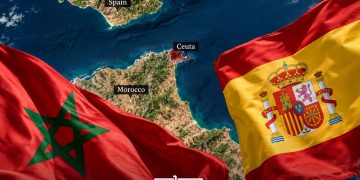





































Washington D.C. – A US House of Representatives draft budget has adopted language that excludes Western Sahara from the US’ financial aid to Morocco, signaling a negative shift in Congress towards Morocco.
The House passed the bill on Thursday, but the Senate has not adopted it yet and nor has President Trump signed it into law.
In recent years, Morocco has relied on the tacit support that Congress, especially the House of Representatives, provided to legitimize its position on Western Sahara. For the past four years, all US budget bills have made US aid for Morocco available for use in Western Sahara.
Read Also: Facts about Western Sahara Conflict that You Should Know
In addition, Congress included Western Sahara in the Morocco section of the budget, highlighting Congress’s support for the Moroccan position.
This year, however, Morocco seems to be losing place in the US Capitol to Algeria and Polisario, whose lobbying firms’ advocacy with members of Congress seems to be paying off.
The new draft bill did not make the aid for Morocco available for use in the Western Sahara, nor did it include the territory in the Morocco section. More still, the section devoted to Western Sahara is seven pages removed from the Morocco section.
If adopted as is, the budget would be a great blow to Morocco and signal that the balance of power in the fierce lobbying and public relations campaign between Morocco and Algeria is tilting in favor of the latter.
Previous budgets supported Morocco
Algeria has long sought to thwart Morocco’s efforts to garner support from both houses of Congress for its position on Western Sahara. Over the past four years, the House of Representatives was leaning towards Morocco and adopted spending bills that favored its position.
For example, the first version of the House of Representatives’ budget in the fiscal year that ended on September 30, 2018, called on the secretary of state to urge the World Food Program to establish a registration system for the delivery of humanitarian aid to the Sahrawis in the Tindouf camps.
The language signaled the House’s support for Morocco’s repeated calls on the UN to conduct a census in the Tindouf camps. Morocco wants the UN to assess the real number of Sahrawis living there and test its accusations that Polisario’s leadership and Algeria are embezzling the humanitarian aid destined for the camps.
Read Also: Western Sahara: US House Adopts pro-Algeria-Polisario Draft Spending Bill
Algerian lobbying at work
But the final version of the budget that Trump signed into law did not include that provision because of Algeria’s lobbying firm’s advocacy. The firm lobbied some key members of the Senate, such as Senators Lindsay Graham, Patrick Leahy, and James Inhofe, a longtime supporter of Polisario and advocate of the rights of Sahrawis to self-determination.
To force the House of Representatives to water down its outright support of Morocco, the three members of the Senate introduced a budget that called on the Trump administration to consult with MINURSO before spending the part of its financial aid for Morocco earmarked for Western Sahara. That language reflected Algeria’s and Polisario’s claim that, since Polisario is the legitimate representative of the Sahrawis, it should be consulted before signing any agreement concerning the territory.
Highlighting the will of both houses to reach a compromise, the final budget bill neither called on the secretary of state to press for the registration of Sahrawis in the Tindouf camps, nor did it call on the Trump administration to consult with MINURSO on the spending of the financial aid made available for Western Sahara.
The final spending bill did, however, include for the first time a paragraph that called on the secretary of state to “inform the Committee on Appropriations on steps taken to strengthen monitoring of the delivery of humanitarian assistance provided for refugees in North Africa, including any steps taken to ensure that all vulnerable refugees are receiving such assistance.”
Read Also: Western Sahara: Everything You Should Know About Morocco’s Autonomy Plan
Morocco saw the inclusion of this language in itself as a significant gain and a signal of the House of Representatives’ support for Morocco.
Setback for Morocco
If adopted as is, the new language in the 2019 draft budget bill, however, would be a blow to Morocco and reflect that the Algerians are again getting the upper hand in the US Congress as a result of the effective work of their lobbying firms, including Foley Hoag. This firm was instrumental over the years in garnering the Senate’s support for the Algerian position.
One has to go back to fiscal year 2011 when Democrats had control of Congress to find US spending bills that neither made US assistance to Morocco available for Western Sahara nor supported Rabat’s position.
While Democrats controlled the House of Representatives during the first two years of Obama’s presidency 2009-2011, the spending bill made the financial aid to Morocco contingent on respecting “the right of individuals to peacefully express their opinions regarding the status and future of the Western Sahara and to document violations of human rights.”
It also urged Morocco to “provide unimpeded access to human rights organizations, journalists, and representatives of foreign governments to the Western Sahara.”
When Republicans controlled the House of Representatives, Morocco successfully gained their support. In the meantime, Moroccan efforts in the House were not matched by a sustained charm campaign to gain Senate support, even though the Senate was under Republican control.
Morocco stepped out, Algeria stepped in
Without sustained Senate lobbying, Morocco left a vacuum which Algeria filled. Algeria had long enlisted the support of Republican Senator James Inhofe, the most vocal supporter of Polisario in the Senate.
Senator Inhofe has visited the Tindouf camps on many occasions and is among the rare Republican lawmakers that supports Polisario and calls for a Sahrawi referendum.
Algeria has relied on this diehard supporter of the Polisario to garner Senate support and temper the House’s support for Morocco. With the recent developments in the House of Representatives, it remains to be seen what options Morocco will have to prevent the Algerian narrative from making more breakthroughs in Congress.
US still supports Morocco
The language in the draft 2019 budget bill does not mean that the US government is leaning towards Algeria and Polisario and turning its back on Morocco for good.
The bill’s language on assistance to the Sahara makes clear that “nothing in this act shall be construed to change the policy of the United States to support the United Nations-led process to monitor the ceasefire and bring about a peaceful, sustainable, and mutually agreed upon solution for the Western Sahara.”
That being said, with the House under the control of the Democrats, the pressure that John Bolton is putting on the parties to show willingness to negotiate a settlement to the conflict, coupled with his long-held support for the referendum, and Morocco’s lack of support in the Senate, Morocco will face an up-hill battle to maintain the gains it has achieved in recent years in Washington.
At the least, Morocco will have to work hard prevent any development that jeopardizes its position.
This new twist in the House of Representative underscores the urgency that the Moroccan diplomatic corps mobilize more than ever before to secure at least the positive neutrality of all branches of the US government.
The current situation requires an overhaul of Morocco’s media and outreach strategy in Washington, D.C. It is high time Morocco moves swiftly to fix what went wrong and devise a new strategy that would help it neutralize Algeria’s full-blown and effective lobbying in Washington, D.C.
Read Also: With Algeria’s PR in Full Swing, Morocco Must Neutralize it
The Moroccan Ministry of Foreign Affairs should figure out how, despite outspending Algeria’s lobbying, Morocco’s efforts have fallen short from achieving a decisive breakthrough in Washington or at least in maintaining the gains of recent years. Any wait-and-see attitude or overconfidence in the strong ties between Morocco and the US will cost Morocco dearly.
Samir Bennis is the co-founder of Morocco World News. You can follow him on Twitter @SamirBennis.