


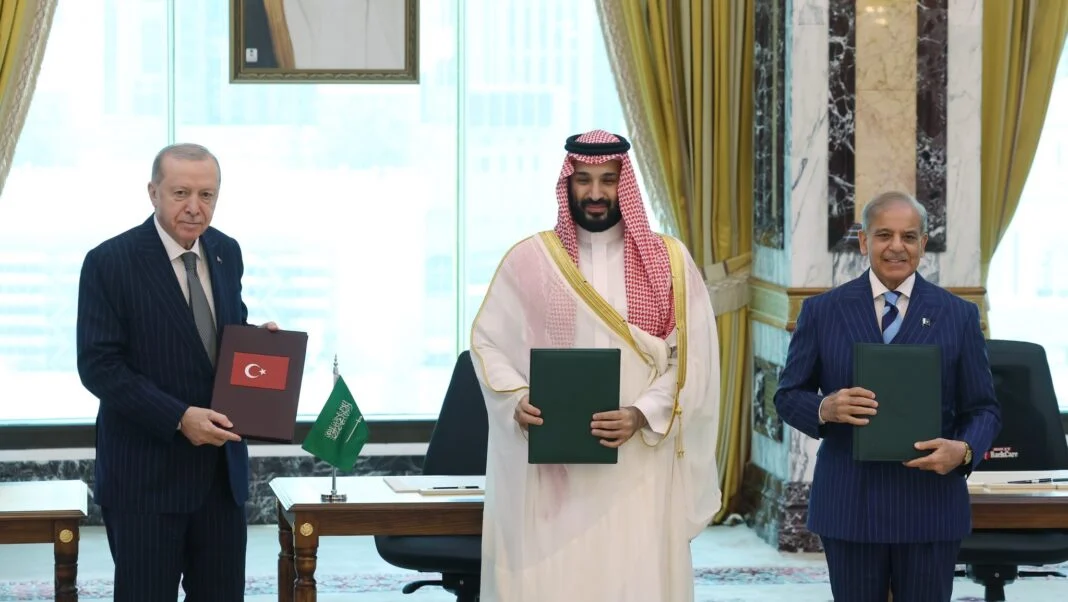
Rabat – Saudi Arabia, Turkey, and Pakistan have signed the Mecca Joint Defence Agreement, establishing a new collective security alliance to deter escalating regional conflict.
The deal was finalized in Mecca following talks between Saudi Crown Prince Mohammed bin Salman, Turkish President Recep Tayyip Erdogan, and Pakistani Prime Minister Shehbaz Sharif, Reuters reported.
Beyond its core collective defense clause, the pact aims to enhance joint deterrence and deepen military cooperation among the three powers.
While precise military obligations remain undisclosed, a Turkish official told Reuters the agreement is purely defensive, open to other regional states, and does not supersede existing bilateral or multilateral alliances.
The agreement is also expected to expand practical military cooperation. According to the Associated Press, the framework seeks to strengthen defense industry cooperation and military coordination among the three countries.
Pact comes amid growing regional instability
The accord arrives during a period of severe regional insecurity, including Itanian drone and missile strikes affecting Gulf infrastructure and persistent disruptions to trade routes through the Strait of Hormuz. Amid these conditions, Gulf nations continue to expand their security networks while preserving primary defense ties with the United States.
The three signatories bring distinct strategic strengths to the framework, while Turkey contributes NATO’s second-largest military and a rapidly growing defense industry, Pakistan adds a large standing army alongside its nuclear deterrent, and Saudi Arabia provides vast financial resources and political influence.
Agreement builds on existing military ties
The new accord formalizes years of deepening security cooperation among the three countries. Saudi Arabia and Pakistan signed a mutual defense agreement in 2025, building on decades of Pakistani military training for Saudi forces. Meanwhile, Turkey and Pakistan have expanded their military ties, while Saudi Arabia acquired Turkish drones in 2023.
The agreement capped nearly a year of quiet negotiations, Reuters reported. Commenting on its strategic impact, Abdulaziz Sager, chairman of the Gulf Research Center, said the accord could strengthen the countries’ collective diplomatic and defense clout and foster a more self-reliant regional security order.


