 Join on WhatsApp
 Join on Telegram
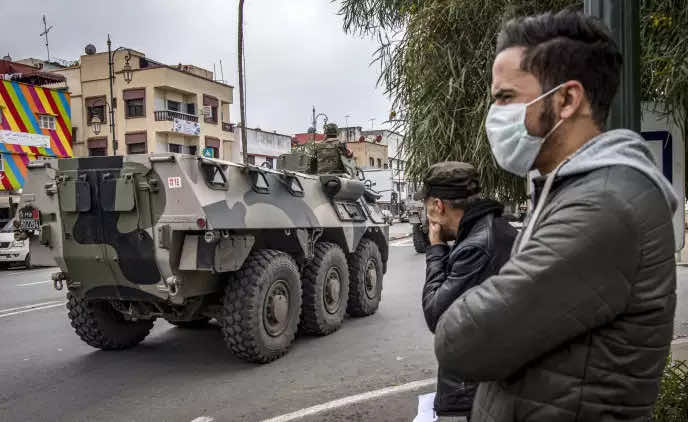
Rabat – One-third of Moroccans (34%) started self-isolating before the government announced a state of health emergency on March 19, a recent report about the impact of COVID-19 on Moroccan households announced.
More than half the Moroccan population (54%) started to self-isolate after the entry of the state of emergency, while 11% of Moroccans only stayed home after the government announced the punishments awaiting state of emergency violators, the High Commission for Planning (HCP) revealed in the report.
Nearly eight Moroccan households out of 10 (79%) reported they fully respected the lockdown regulations and 21% said they respected them partially.
The vast majority of Moroccans (94%) declared that they leave their homes to shop for groceries. Nearly one-third of the population (30%) go out to work, 10% leave their homes to get administrative documents, and 7% to receive medical treatment. One-third of those who leave their homes for medical treatment (32%) are elderly.
The report also revealed that 7% of Moroccans go out for “recreational needs.” Children aged below 18 years represent half of those who participate in recreational outings (50%).
Most Moroccans know main COVID-19 symptoms
Moroccan households reported varied knowledge of the symptoms of COVID-19. The most well-known symptoms of the virus are fever (89% reported knowing), dry cough (77%), and shortness of breath (64%).
Meanwhile, the least-known symptoms are loss of taste (5.8% reported knowing), loss of smell (8.1%), and muscle aches (10.4%). Approximately 7% of Moroccans declared not having any knowledge of COVID-19 symptoms.
Three-quarters of the Moroccan population (76%) know how to react when they suspect having contracted the coronavirus: Stay at home and call the Ministry of Health’s hotlines. Approximately 15% of Moroccans said they would visit the hospital, while 4% declared they would seek help from relatives.
More than eight Moroccan households out of 10 (83%) are aware of the toll-free numbers the health ministry launched for citizens to ask about COVID-19 and to declare suspected cases.
Vast majority of Moroccans adopted preventive measures
The report revealed that 99.5% of Moroccans declared taking at least one preventive measure to protect themselves and their families, colleagues, and friends from COVID-19.
The most frequent practice is washing hands with soap and water, which 97% reported doing, followed by wearing face masks (65%), avoiding handshakes and physical contact (63%), going out less frequently (60%), regularly disinfecting surfaces (51%), maintaining a safe distance from others (48%), and regularly disinfecting hands (47%).
Other preventive measures Moroccans adopted include avoiding crowded places (31%), wearing gloves (7%), and working remotely (3%).
Most Moroccans (86%) believe that the strict application of lockdown measures is necessary to curb the spread of COVID-19 and approximately 44% think that the availability of protective gear is important. Supplying local grocery stores (25%), distributing disinfectants (24%), massive COVID-19 testing (23%), and adapted health infrastructures (22%) are also some of the measures Moroccans suggested to fight against the pandemic.
National television and radio are the main sources of information about COVID-19 for Moroccans, with 87% of the population using them to follow the pandemic’s evolution. Social media comes second (6%), followed by electronic newspapers (3%), and family or friends (2%).
Essential goods remain available
The majority of Moroccan households (93%) said basic food products, such as flour, oil, sugar, and vegetables, are available in sufficient quantities during the country’s state of emergency. Meanwhile, 6% of households declared not being able to find all essential food products, including 8% of poor households and 3% of well-to-do families.
One-quarter of Moroccans (24%) noticed an increase in the prices of basic food products during the lockdown, while 75% did not report any change in prices.
99% of Moroccans use butane gas cylinders as the main energy source for cooking, and 97% said butane is available in Moroccan markets in sufficient quantities.
Supply of protective gear shows disparities
Only one-third of Moroccan households (33%) declared having protective face masks in sufficient quantities. Approximately 41% said their masks are insufficient, while 27% do not have any. The share of Moroccans who have sufficient face masks is higher among well-to-do families (58%) than poor households (27%).
Half of Moroccan families (51%) do not have any disinfectants, with their share ranging from 43% in cities to 70% in rural areas. Approximately 40% declared having them in sufficient quantities and 9% have insufficient quantities. The majority of wealthy households (79%) have enough disinfectants, while only 28% of poor families declared having enough.
Meanwhile, half of the population that does not have disinfectants or has them in insufficient quantities (50%) said they do not have enough because they did not try to purchase them. More than one-third (36%) stated that their budget does not allow them to buy the products.
To prepare the report, HCP contacted a total of 2,350 Moroccan households during the fourth and fifth weeks of the country’s state of emergency, April 14-23. The institution collected data via telephone interviews about the impact of COVID-19 on Moroccans, notably in terms of compliance with the lockdown, preventive measures, supply of essential goods, sources of income, access to education, access to healthcare, and psychological reactions.